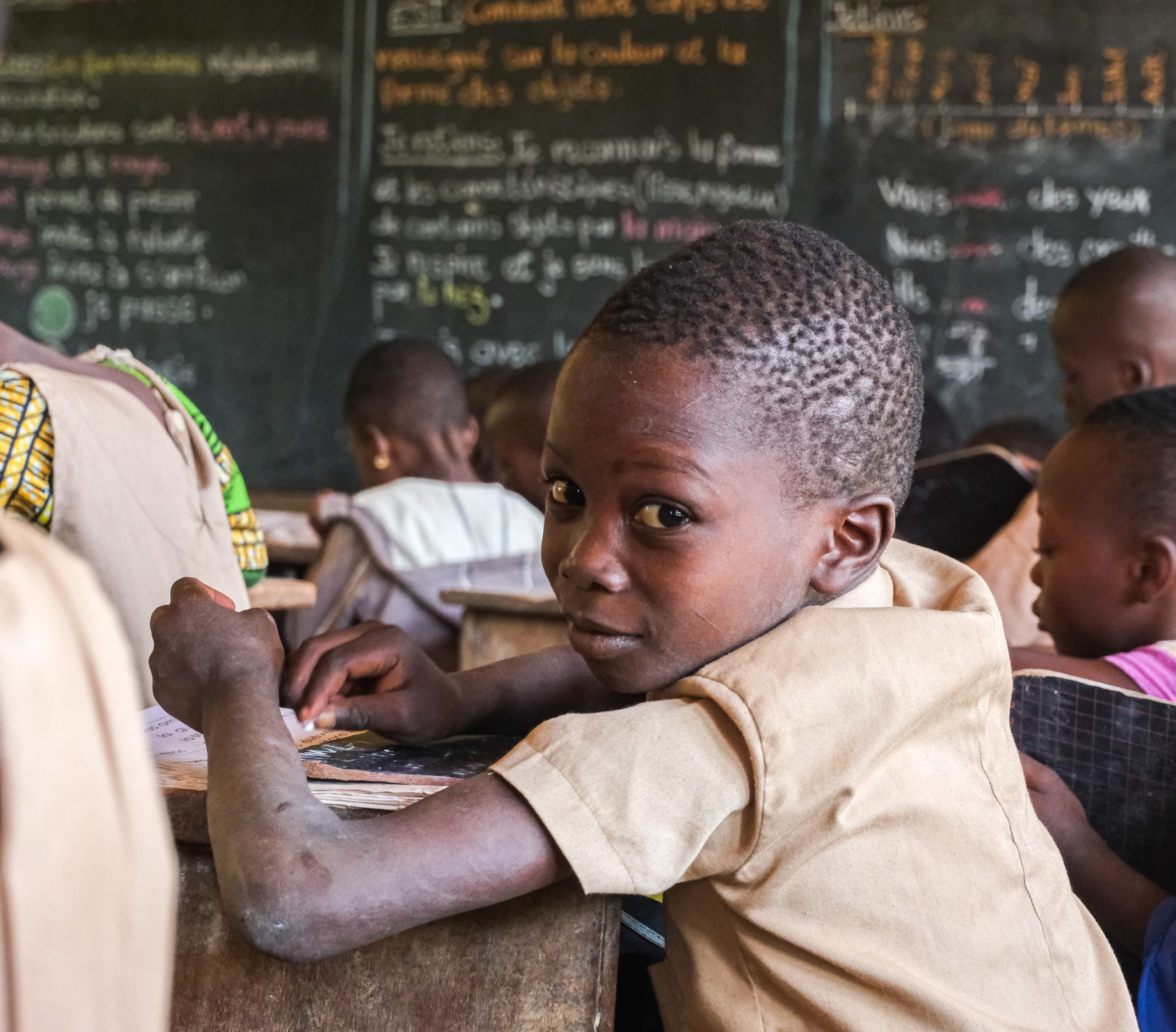
Learning in Peace, Educate without Violence
A program to protect children, prevent extremism and build an inclusive and empowering school environment.
In northern Benin, many children face educational violence, early marriage and pressure from violent extremism. These challenges undermine learning and well-being and deepen inequalities in access to quality education.
The Learning in Peace, Educating without Violence program, supported by Swiss Cooperation, transforms educational practices to strengthen the protection, inclusion and well-being of children.
It trains teachers in non-violent teaching approaches, mobilizes families and engages communities to build environments where every child is respected, protected and free to learn.
This approach helps reduce educational violence over the long term and strengthens students’ resilience in the face of social tensions and the risk of radicalization.
International Recognition
UNESCO-HAMDAN PRIZE LAUREATE
A global distinction recognizing the excellence of our teacher training and the program’s measurable impact on child protection and well-being.
About the program
Objectives
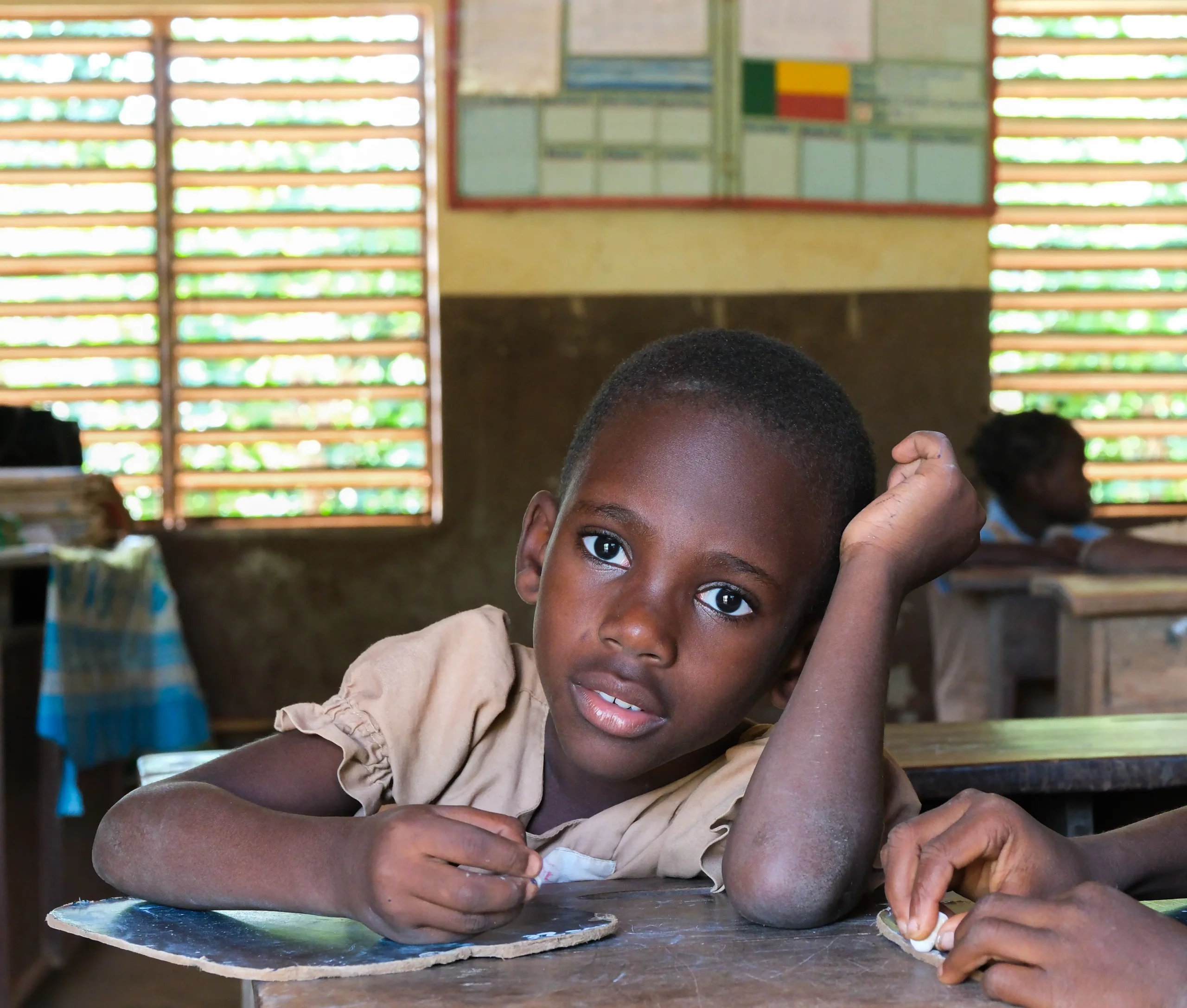
- Improves the quality of foundational learning in mathematics and French.
- Reinforces a safe and serene classroom climate through non-violent educational practices.
- Promotes equity between girls and boys and encourages social inclusion.
- Equipping teachers, parents and local leaders with protective practices and tools
Approach
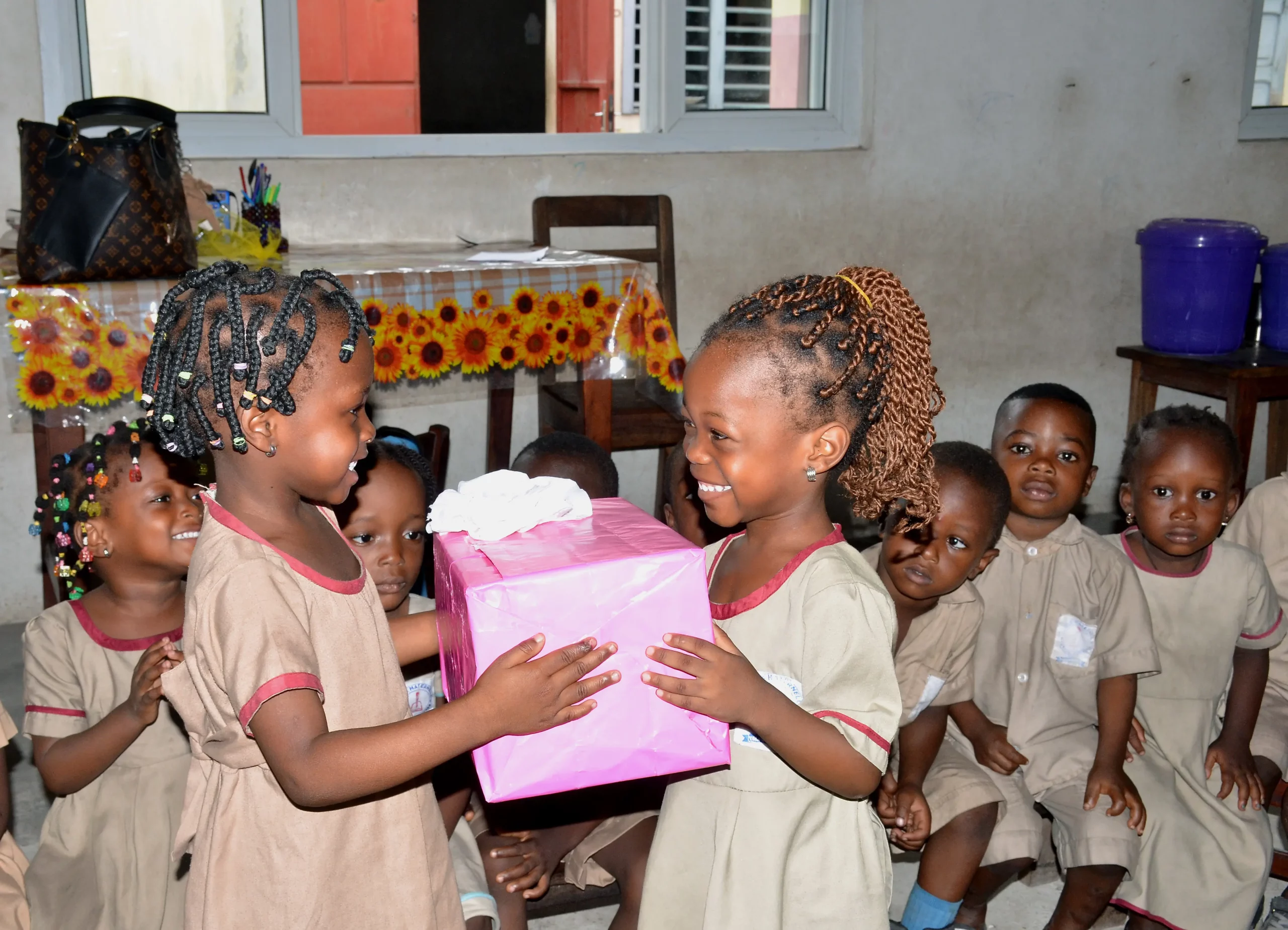
The program is based on a transformative pedagogy operating at three levels:
- Learning: active, inclusive and gender-sensitive methods.
- Educational relationships: supportive postures and collaborative practices.
- Violence prevention: constructive alternatives to educational violence, fostering peace and resilience.
This approach operates both in schools (teachers, principals, students) and in communities (parents, leaders, associations) to create a protective, inclusive and future-oriented environment.
Implementation
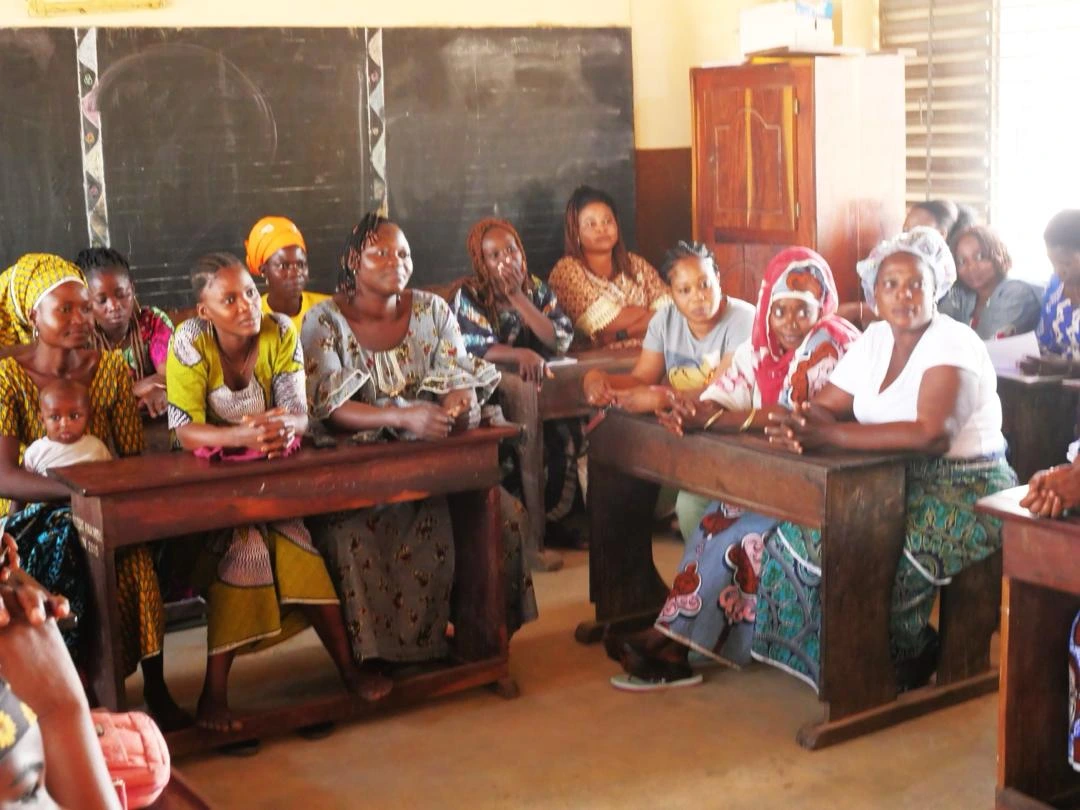
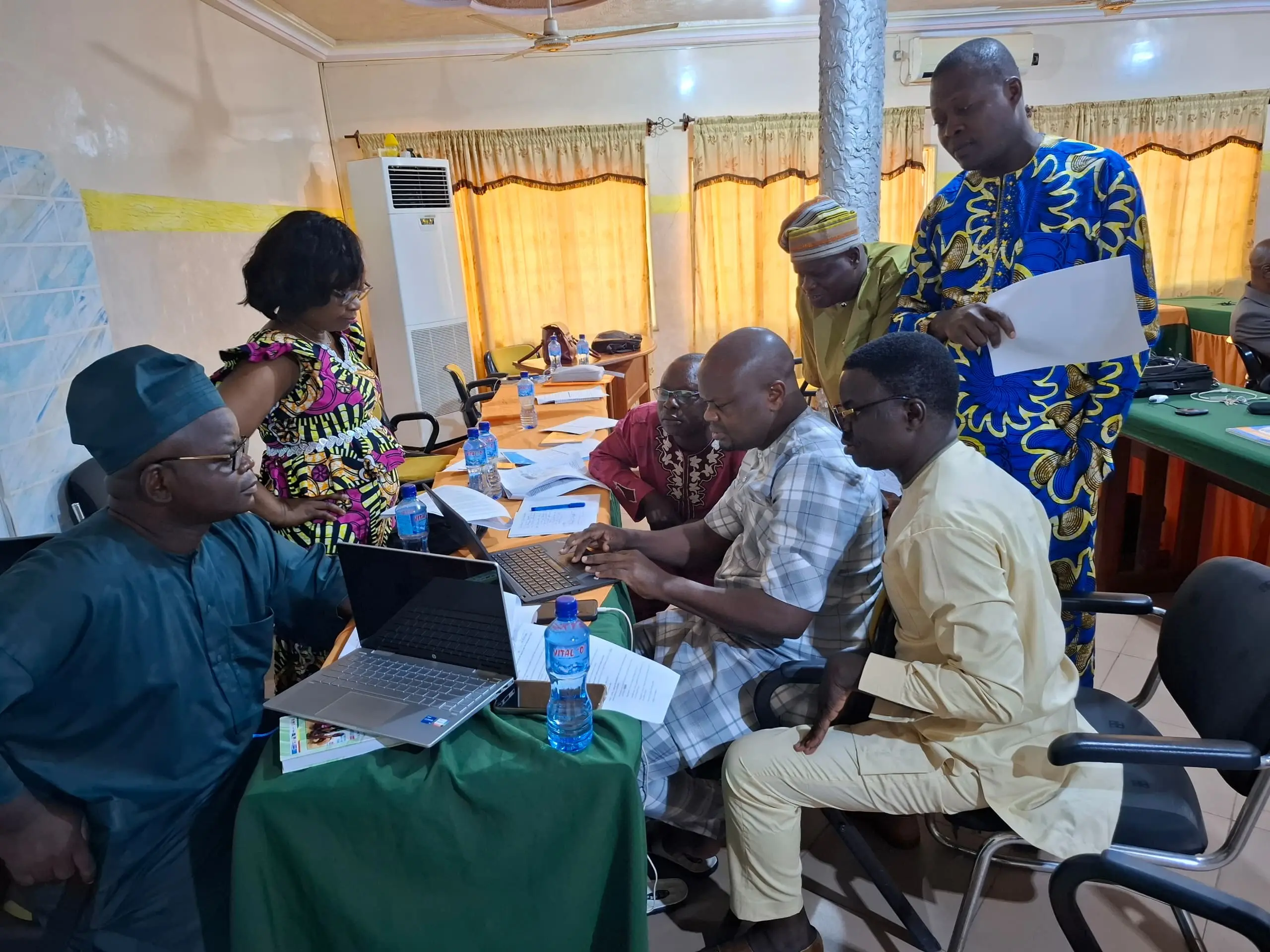
- Cascade training for teaching staff, educational teams and school inspectors.
- Produce teaching resources: guides, kits, illustrations, videos.
- Facilitate community workshops with social workers and local leaders.
- Disseminate audiovisual capsules to raise awareness.
- Collaborate with ministries and local stakeholders to ensure anchoring and sustainability.
Design
APEV is the result of a participatory approach involving ministries, communities, teachers and civil society. This co-construction ensures local ownership and the sustainable integration of practices into the Beninese education system.
The two components of the APEV program
School program
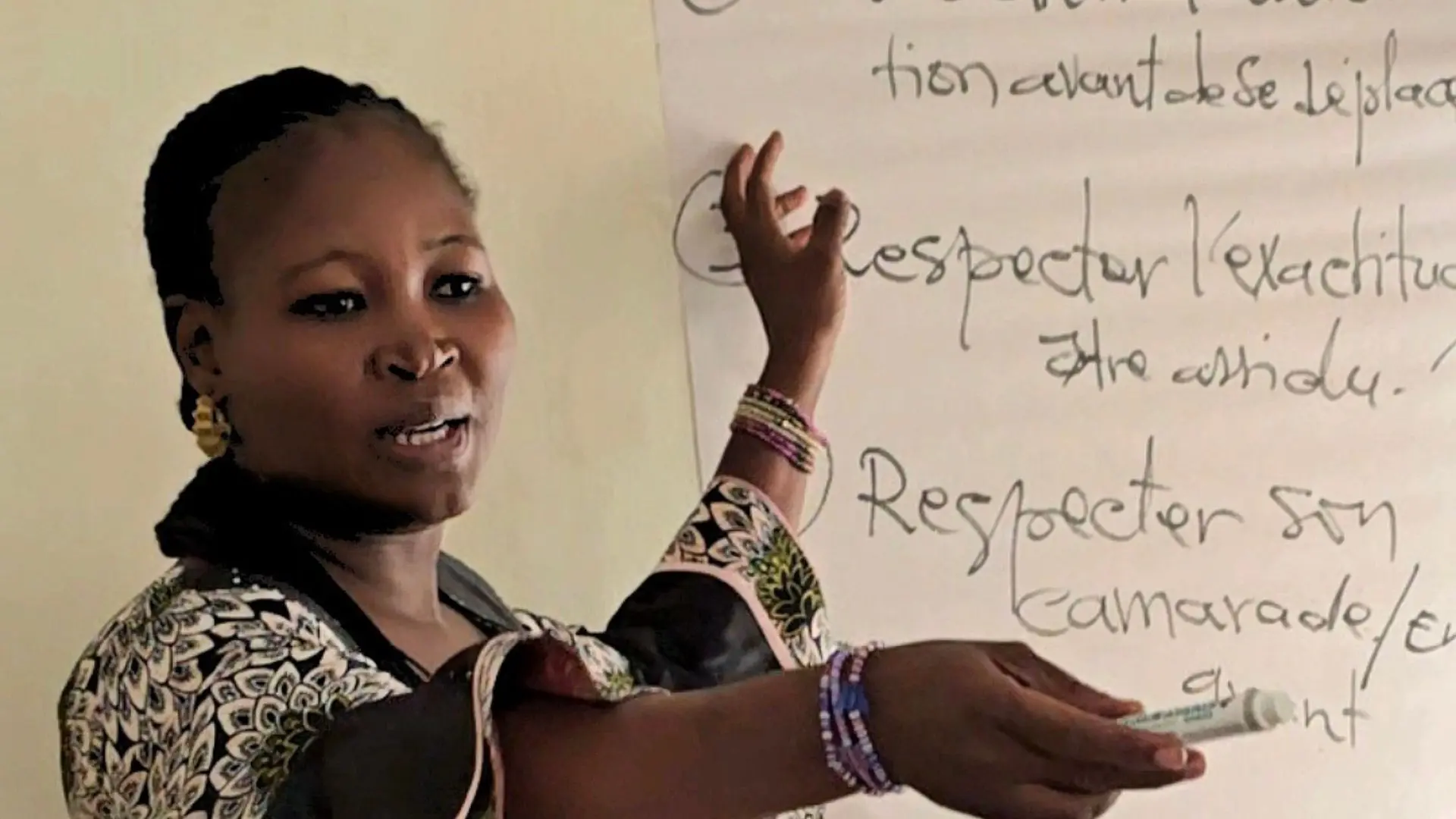
Resources and training for primary school teachers to improve learning in French and mathematics, adopt positive teaching practices and foster a calm, inclusive classroom climate.
Program for communities and families
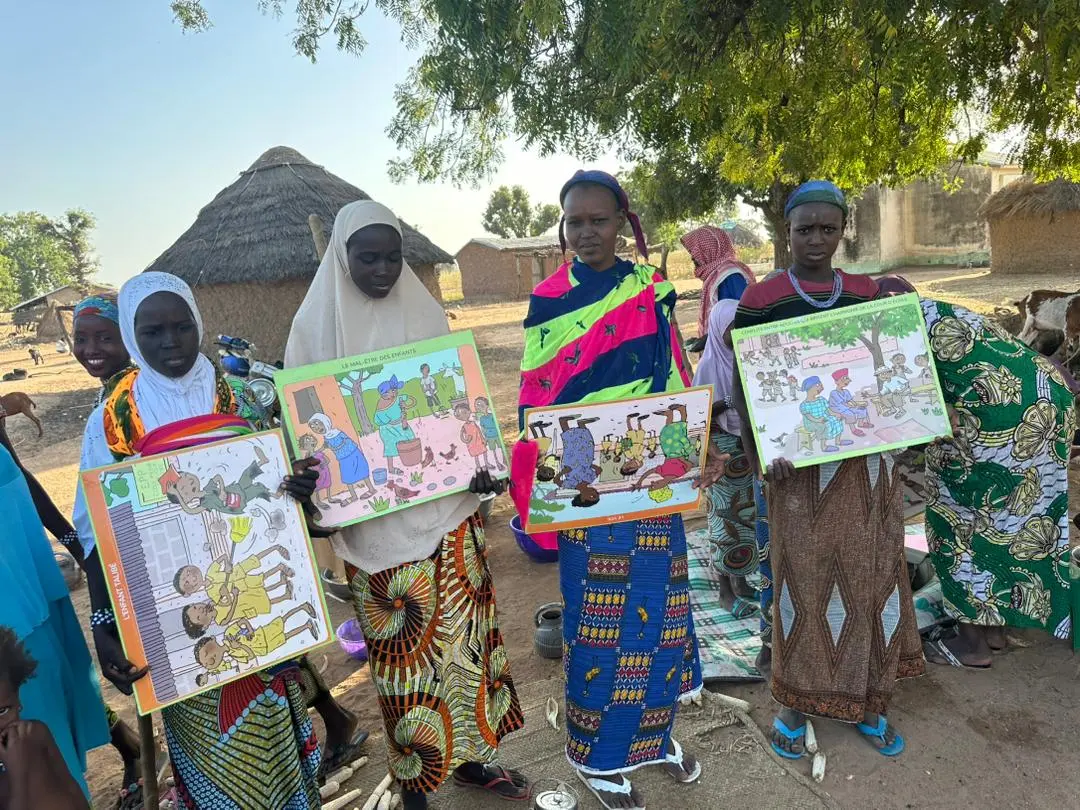
Activities and tools to mobilize families, raise community awareness and support local leaders in building a protective, cooperative school environment that is attentive to children’s well-being.
Transforming education means giving children the strength to succeed and build the future.
Observed impacts in Benin
- Strengthening learning:
Progress in mathematics and French through to active and collaborative teaching practices. - Calming the school climate:
Reduced educational violence, improved emotional regulation and non-violent conflict resolution. - Promoting gender equity:
Increasing girls’ participation and reducing discrimination at school. - Mobilizing communities:
Parents, community leaders and associations are more actively involved in supporting educational success. - Equipping teachers :
Adoption of empowering teaching approaches that foster cooperation and students’ self-confidence.

884’970
children

18’910
trained teachers

45’150
aware parents
History of the APEV program
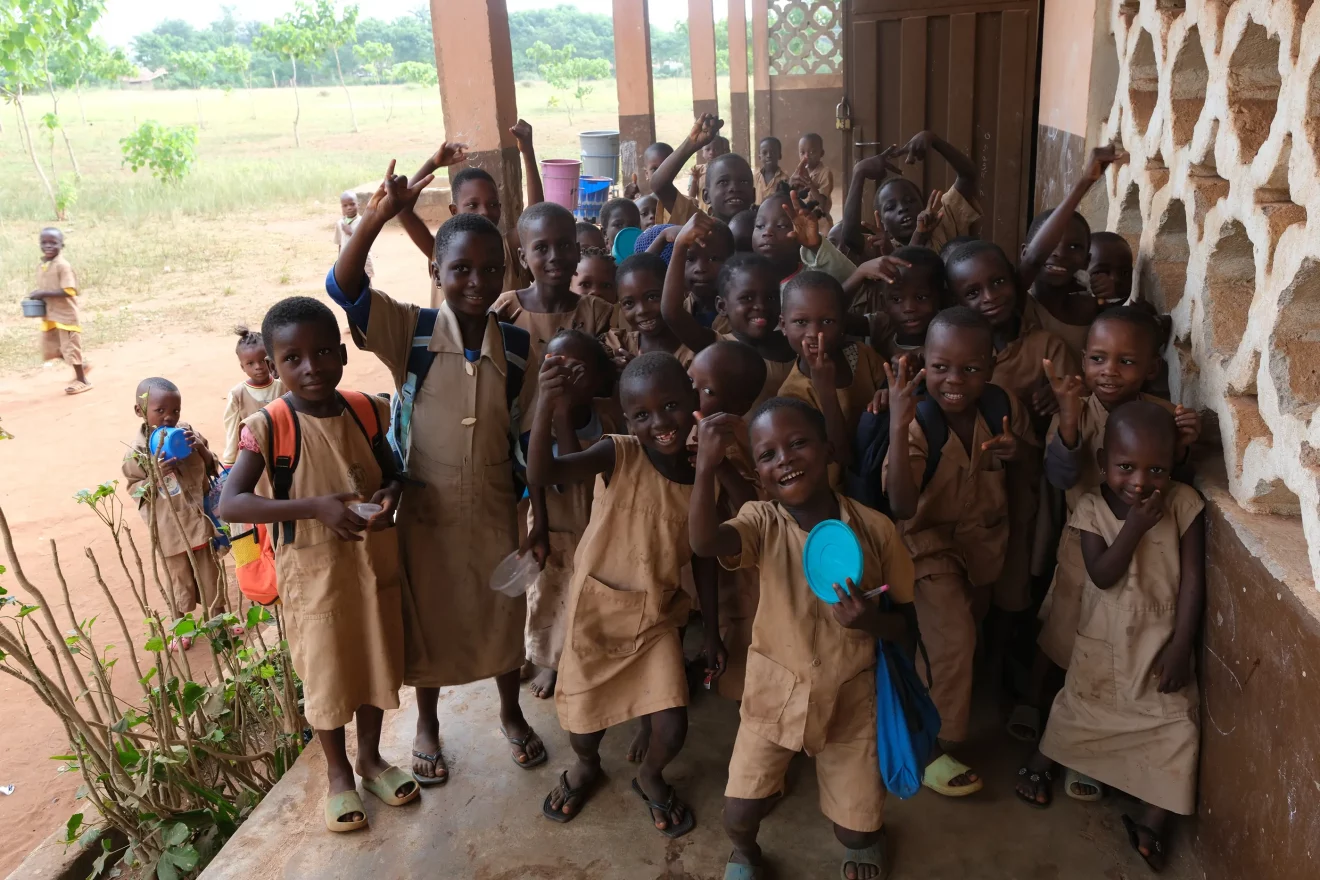
Launched in 2019, the Learning in Peace, Educating without Violence program has been developed in three stages
- 2019-2021 – APEV: pilot phase to test innovative teaching approaches.
- 2022-2024- APEV-Innovation: piloting new educational practices, with an expanded number of beneficiaries.
- Since 2024 – APEV-Transformation: nationwide rollout with a focus on foundational learning (mathematics and French) and violence prevention.
Today, APEV-T is consolidating this approach through joint interventions in schools and communities, anchoring more inclusive, protective and effective pedagogical practices across the Beninese education system.
What they think



Subscribe to our
newsletter
Discover our actions to prevent educational violence, support teachers and strengthen community resilience.