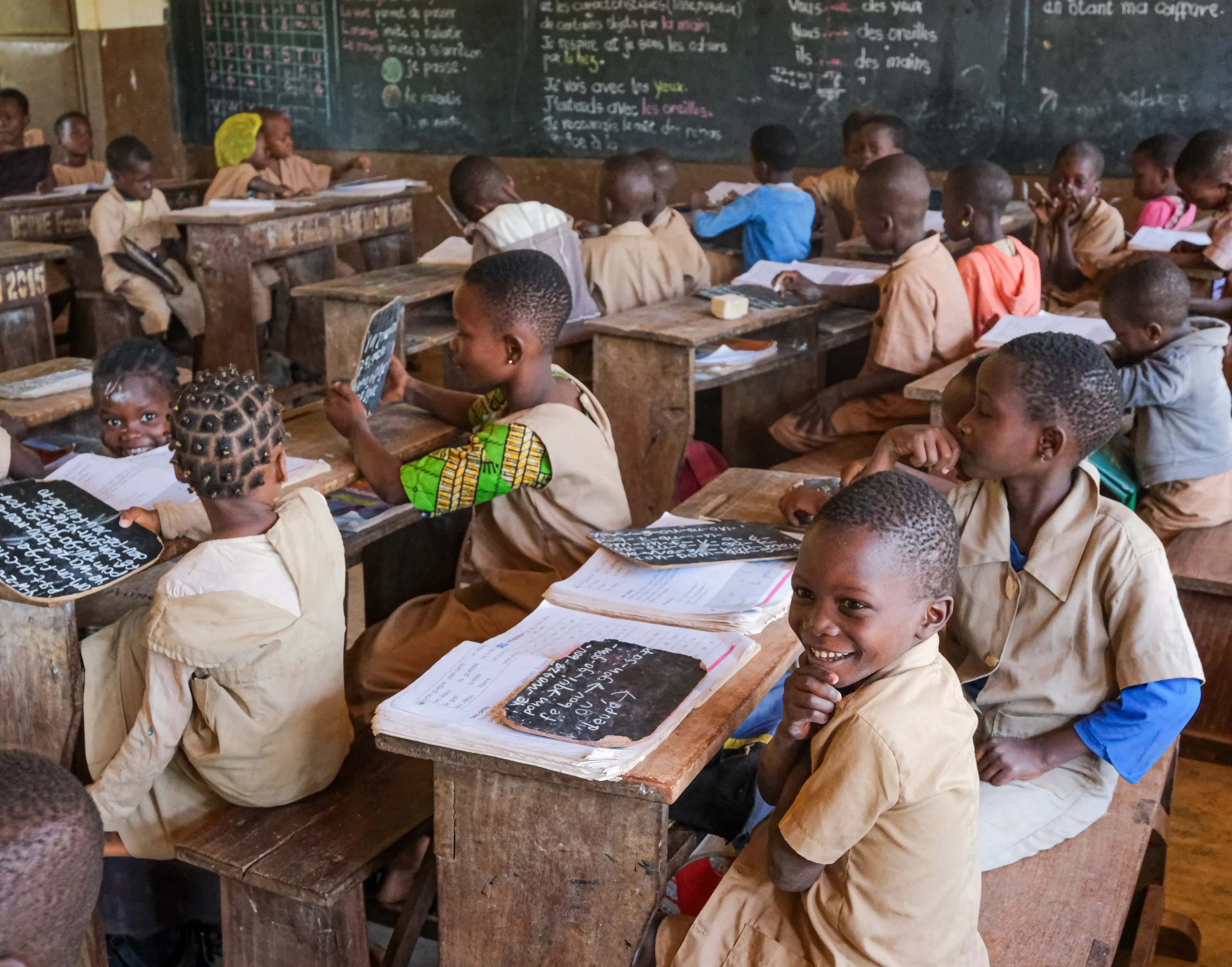
Our vision of education, a simple conviction:
peace begins in the classroom
Our pedagogy and teaching methods
Education must do more than impart knowledge: it must prepare each child to navigate a complex world, act with discernment, manage their emotions, respect others, and build balanced relationships.
Our pedagogy reflects this ambition for a high-quality education, both academic and human: a holistic approach focused on students and attentive to the quality of relationships in the classroom.
The challenges ahead
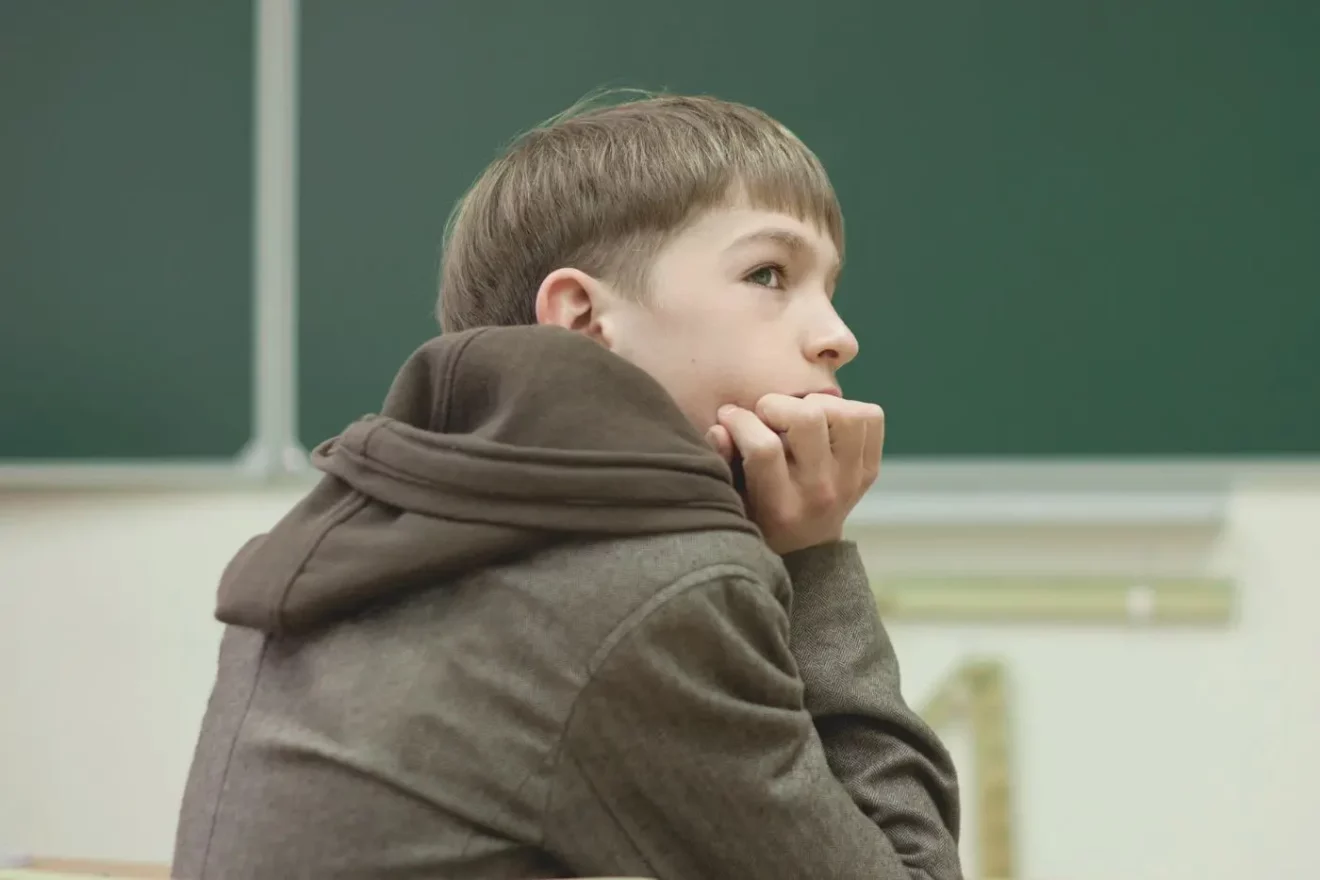
All over the world, schools are confronted with multiple realities. Every day, teachers and students face a range of challenges, including:
- often heterogeneous and sometimes overcrowded classrooms,
- for students facing emotional, social or family difficulties,
- harassment, discrimination and violence in educational settings,
- school-related pressures that undermine the classroom climate and affect students’ well-being.
These tensions undermine the quality of learning and the well-being of all. They also reveal a growing need for interpersonal, emotional and citizenship skills to learn how to cooperate, manage conflicts and face contemporary challenges, particularly those linked to digital transformations.
Our teaching approach
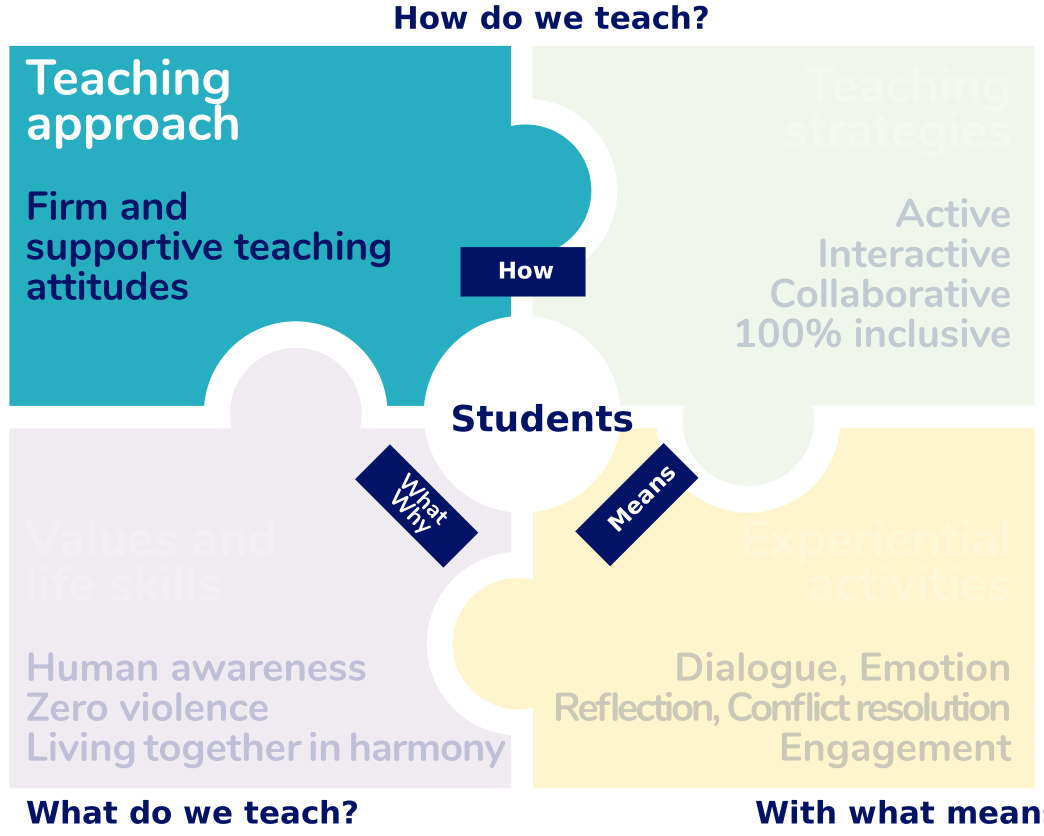
To address these challenges, we have developed a pedagogy centered on the students and on the quality of classroom relationships. It is based on four complementary levers that shape how we teach, what we teach, and how learning takes place.
Teaching method
We support teachers in adopting firm and empowering professional postures. They learn to :
- Establish a clear, firm and respectful framework.
- Encourage each student through constructive, personalized feedback,
- Manage challenging behavior calmly and consistently,
- Value efforts as much as results.
In practice: rather than immediately punishing a disruptive pupil, the teacher seeks to understand the underlying unmet need and guides the child toward appropriate behavior.
These postures transform the teacher-student relationship, strengthening mutual trust and fostering a genuine desire to learn.
Teaching strategy
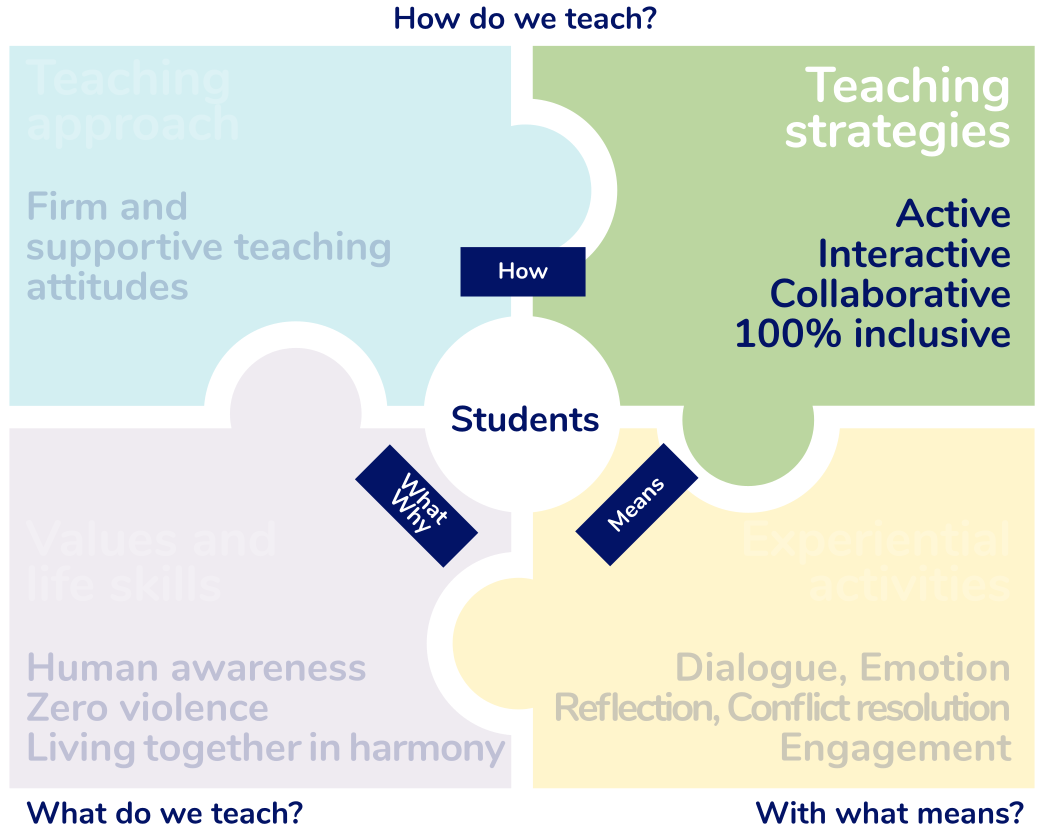
Our methods place each student in an active learning process. Rather than transmitting knowledge in a top-down fashion, teaching becomes participatory, collaborative and inclusive.
In practical terms, this means :
- collaborative projects in small groups,
- discussion circles where everyone can express themselves without judgment,
- inquiries and experiments based on students’ questions.
This approach stimulates curiosity, develops critical thinking and gives every student a genuine chance to succeed, regardless of their starting point.
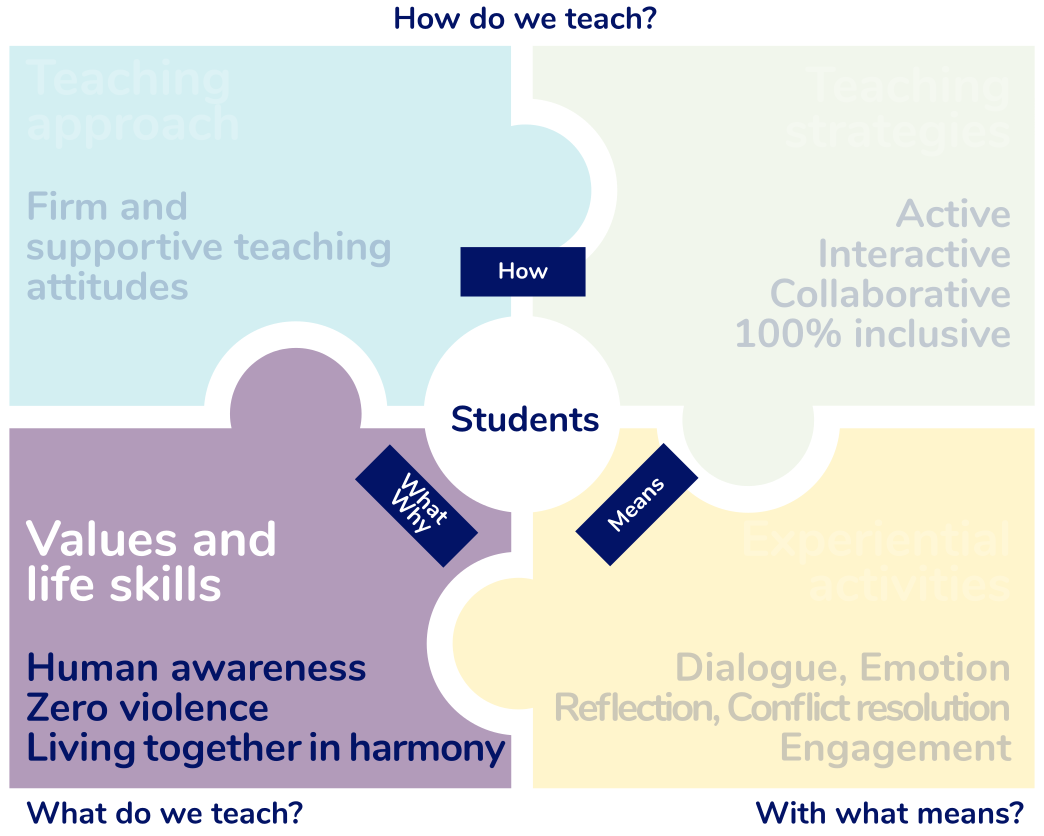
Values and skills
Education goes beyond academic knowledge: it helps students understand the world, find their place among others and build respectful relationships.
Our pedagogy develops life skills that support both learning and well-being:
-
Socio-emotional skills: recognizing one’s own emotions, understanding those of others, cooperating, and preventing conflict.
-
Cognitive skills: critical thinking, reasoning, imagining solutions, and learning how to learn.
-
Citizenship skills: respecting diversity, contributing to the group, getting involved and acting responsibly.
These skills, acquired from an early age, have a lasting impact on how students perceive the world, interact with others, and build their future.
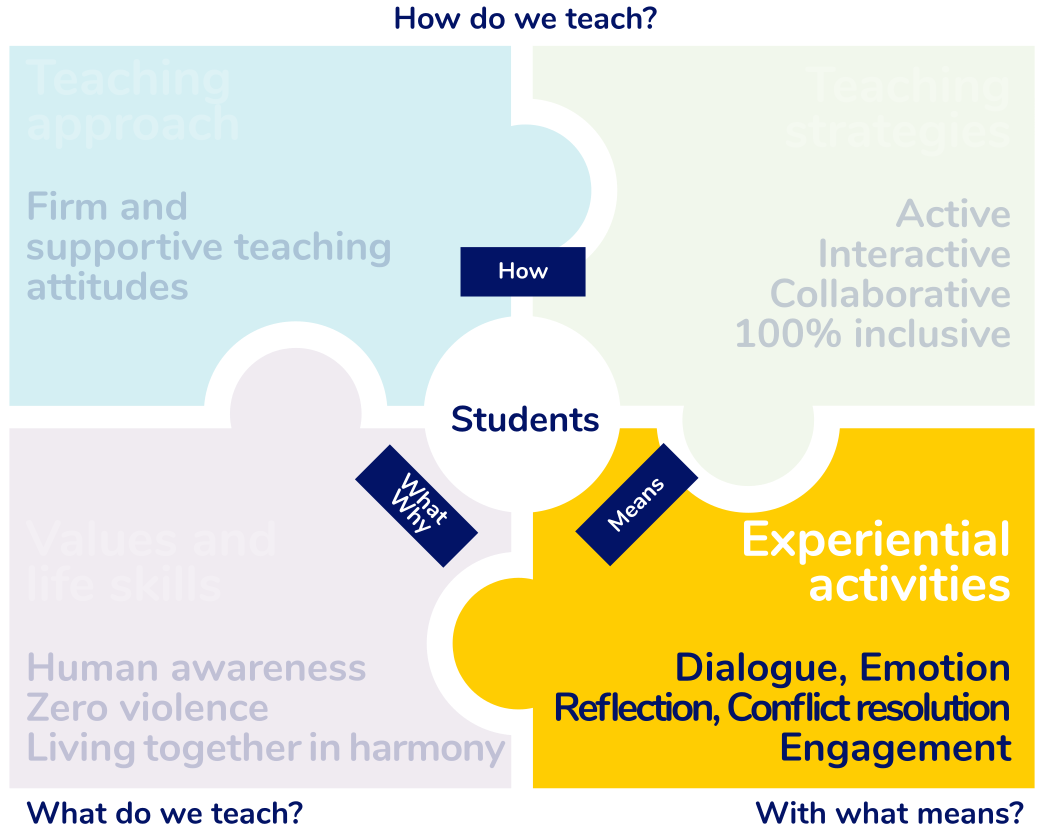
Experiential activities
Students learn by practicing life skills. Our programs incorporate hands-on activities that make learning come alive:
-
Role-playing to explore different perspectives and develop empathy,
-
Peer mediation for non-violent conflict resolution,
-
Cooperative workshops to build on individual and collective strengths,
-
Group projects to address a class or school-related issue.
These experiences strengthen students’ relational and reflective skills, which are essential to preventing violence and building balanced relationships from an early age.
Preparing students for tomorrow’s challenges
These four pedagogical levers are not an end in themselves: they form the foundations that enable each student to fully develop.
Over time, the skills developed in the classroom become solid reference points for understanding the world, making informed choices and acting responsibly.
In this way, schools fully play their role: supporting children as they grow in confidence and become citizens capable of making a positive contribution to society.
A transferable and sustainable approach
Our pedagogical levers are designed to be easily and sustainably adopted by educational stakeholders. They are based on a proven method developed in partnership with teachers, institutions, and field experts.
- Pedagogical design and educational R&D
Our resources are developed through a continuous improvement approach, including classroom testing, feedback from teachers and successive refinements to ensure quality. - Cascading training and dissemination
We train teachers, trainers, and educational managers, then support national teams so they can in turn disseminate these practices. This model strengthens local capacities. - Institutional integration
We work with ministries and educational institutions to ensure that our approaches are embedded in official standards, an essential condition for sustainable adoption. - Ongoing follow-up and support
We work closely with teaching teams to consolidate practices, support change, and ensure long-term sustainability.
A direct contribution to the Sustainable Development Goals
Our action is fully aligned with the international educational and societal priorities set out in the United Nations Sustainable Development Goals (SDGs).
In concrete terms, our educational action contributes directly to several of these objectives:
ODD 3
Good Health and Well-being
By reinforcing the mental well-being of students and teachers, preventing school-related distress, and reducing educational violence, we contribute to psychological and social health from an early age.
ODD 4
Quality Education
By developing both academic learning and life skills, we support equitable access to inclusive and quality education that promotes well-being.
ODD 5
Gender Equality
By ensuring girls and boys have equal opportunities for participation, success, and personal development, we make gender equality an essential component of our educational programs.
ODD 16
Peace, Justice and Strong Institutions
By preventing violence in schools and educational settings from an early age, we help create peaceful learning environments that foster social cohesion and stability.


Subscribe to our
newsletter
Receive our analyses and updates on today’s educational challenges.