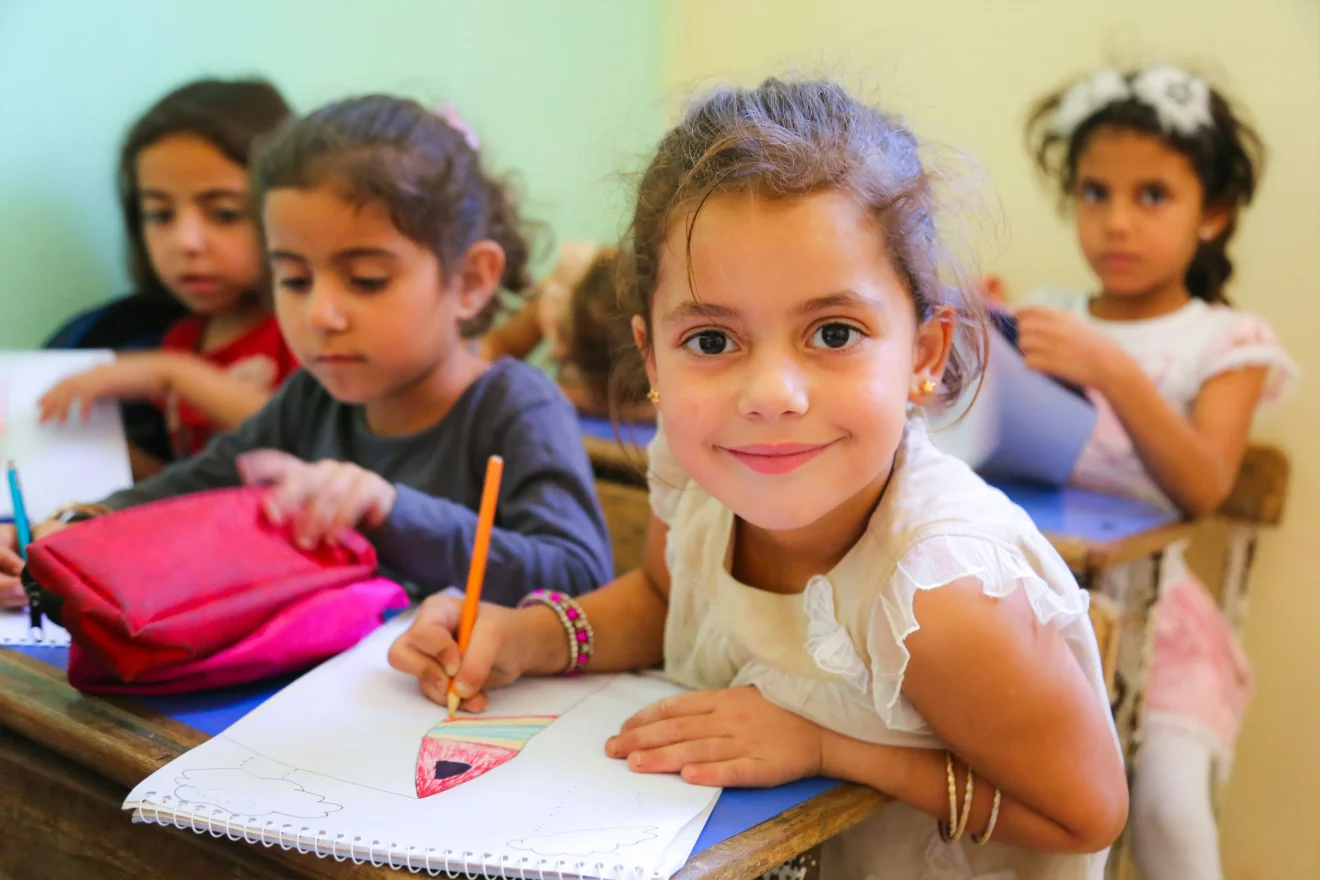
Graines de Paix works to ensure that every child can learn in a safe, inclusive and empowering environment, and fully develop their capacity to act.
Our educational action
We develop innovative educational approaches that transform teaching practices, strengthen learning and cultivate essential life skills for peace.
Our action is built on three complementary pillars:
CREATE, TRAIN, RAISE AWARENESS
Together, they form a coherent and sustainable approach to develop children’s and young people’s human and social skills, foster respectful relationships and prevent violence.
Create
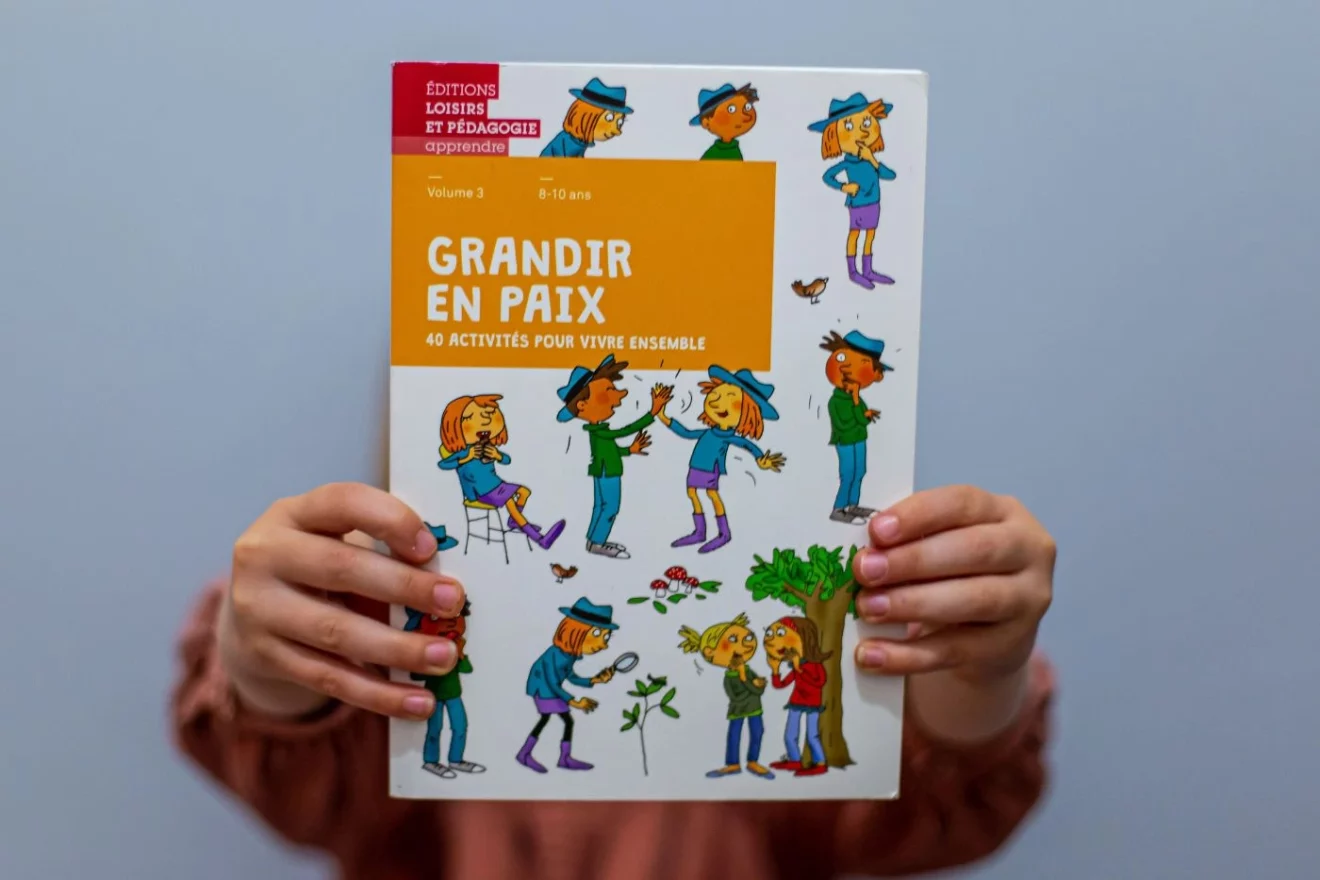
Design innovative educational tools
We create practical, adaptable and accessible resources: teaching guides, project workbooks, illustrated learning materials, exhibitions, training kits and digital resources.
Designed with and for teachers, these resources support the implementation of participatory and empowering educational practices, adapted to diverse cultural and educational contexts, where every child feels valued and able to succeed.
Train
Transforming educational practices
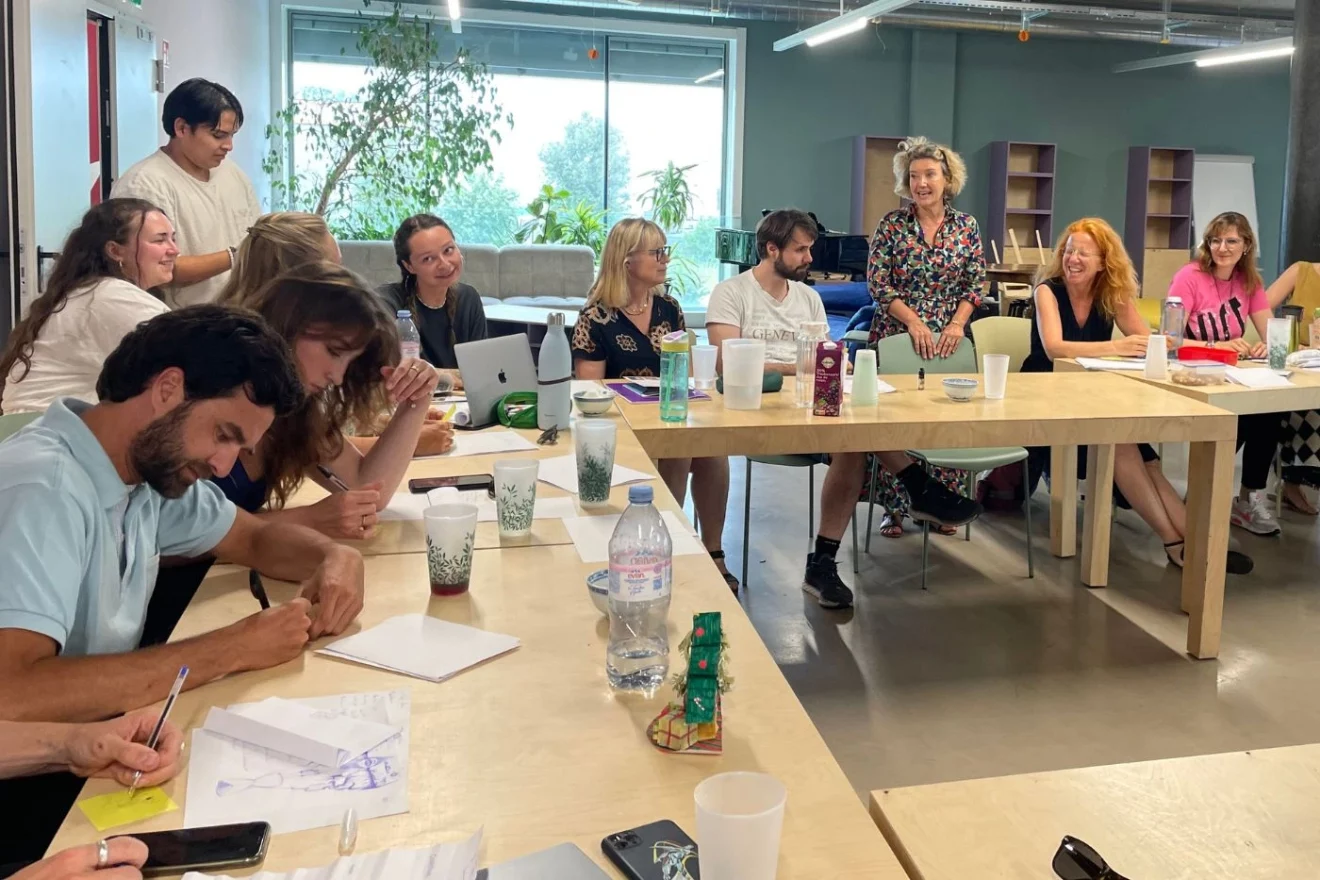
We train teachers, trainers and educational leaders in interactive, non-violent and empowering educational practices.
These training programs strengthen educators’ professional posture, promote participatory methods and integrate life skills into teaching practice.
They equip educators to apply the Graines de Paix approach in their own context, creating learning environments where every student feels valued and able to succeed.
Raising awareness
Engaging families and communities
Education doesn’t stop at the school gate.
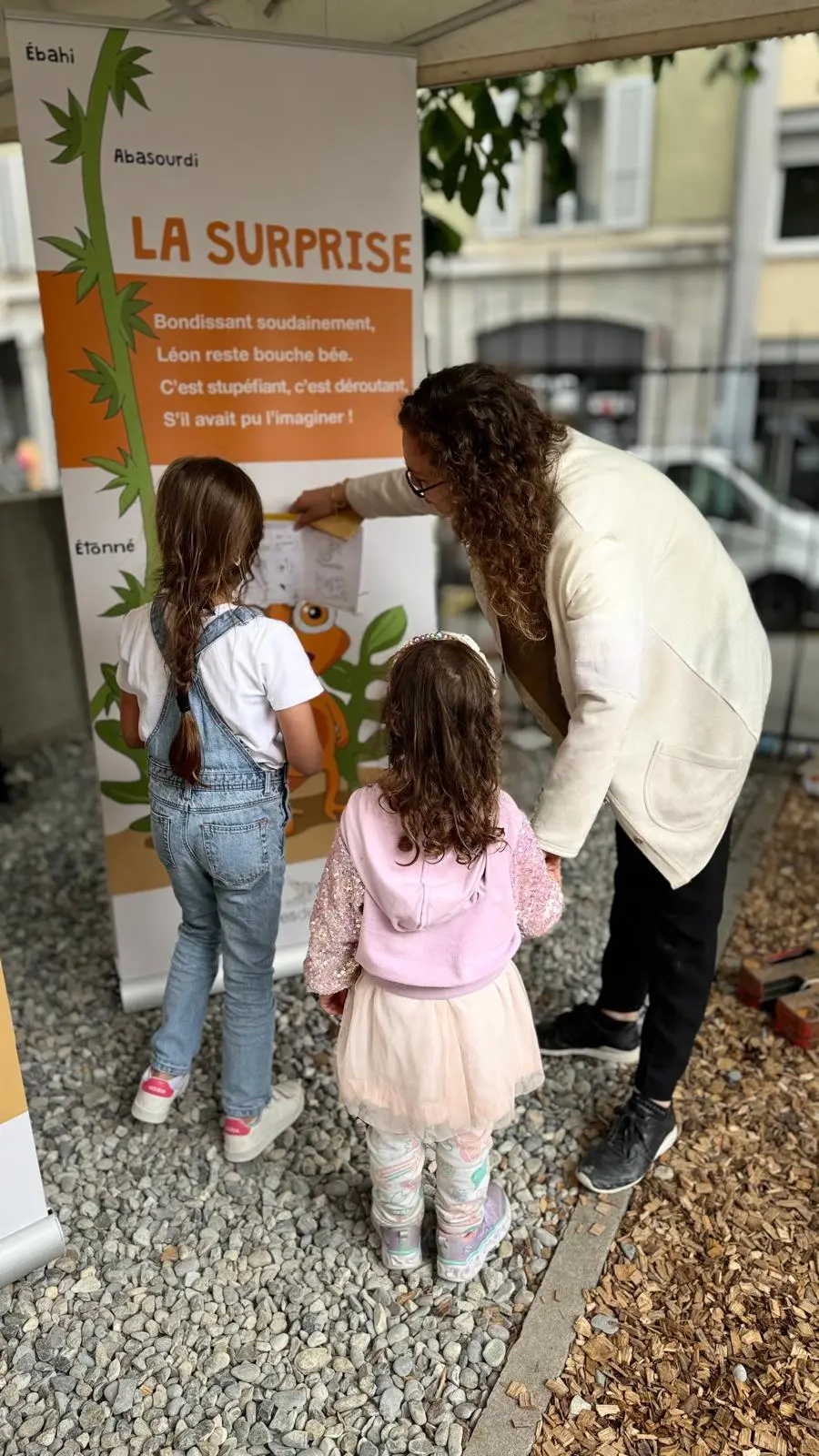
Our awareness-raising initiatives engage parents, community and religious leaders, social workers and young people to strengthen educational consistency in children’s lives.
Through workshops, films, local campaigns and cultural initiatives, we foster dialogue, prevent violence and promote positive and equitable education for all.
Lasting impact
A systemic approach that transforms the entire education ecosystem
Our action goes beyond a single classroom or individual teacher. We act simultaneously across three interconnected levels:
In the classroom :
Trained teachers use our educational tools to create a calm and supportive classroom climate in which every student develops essential life skills. Participatory methods gradually replace top-down approaches.
At school :
Practices spread among colleagues, strengthening a shared pedagogical culture. Teaching teams exchange experiences, gradually transforming the school as a whole.
In communities :
Engaged families extend learning at home and strengthen continuity between school and home.
Local leaders also play an active role in supporting these changes, fostering a more protective and inclusive social environment.
This collective dynamic, from individual practices to institutional policies, ensures that these transformations are sustained over time.