
AdoGoZen
A program that actively involves young people in finding and implementing solutions to violence, in order to foster more peaceful and rewarding relationships.
Emotional crises, impulsivity, ordinary violence…
Teenagers often express their fragility without always knowing how to regulate it.
AdoGoZen is aimed at social and cultural centers and youth centers, offering practical, simple and effective tools to help young people aged 11-16 develop their life skills.
Through an approach based on mindfulness, emotional intelligence and active experimentation, the program helps them gain clarity, inner calm and confidence.
About the program

AdoGoZen aims to:
- Developing teenagers’ emotional intelligence
- Improving concentration, self-awareness and stress management
- Strengthening interpersonal skills and cooperation
- Preventing risk behaviours and violence
- Creating soothing and reassuring environments
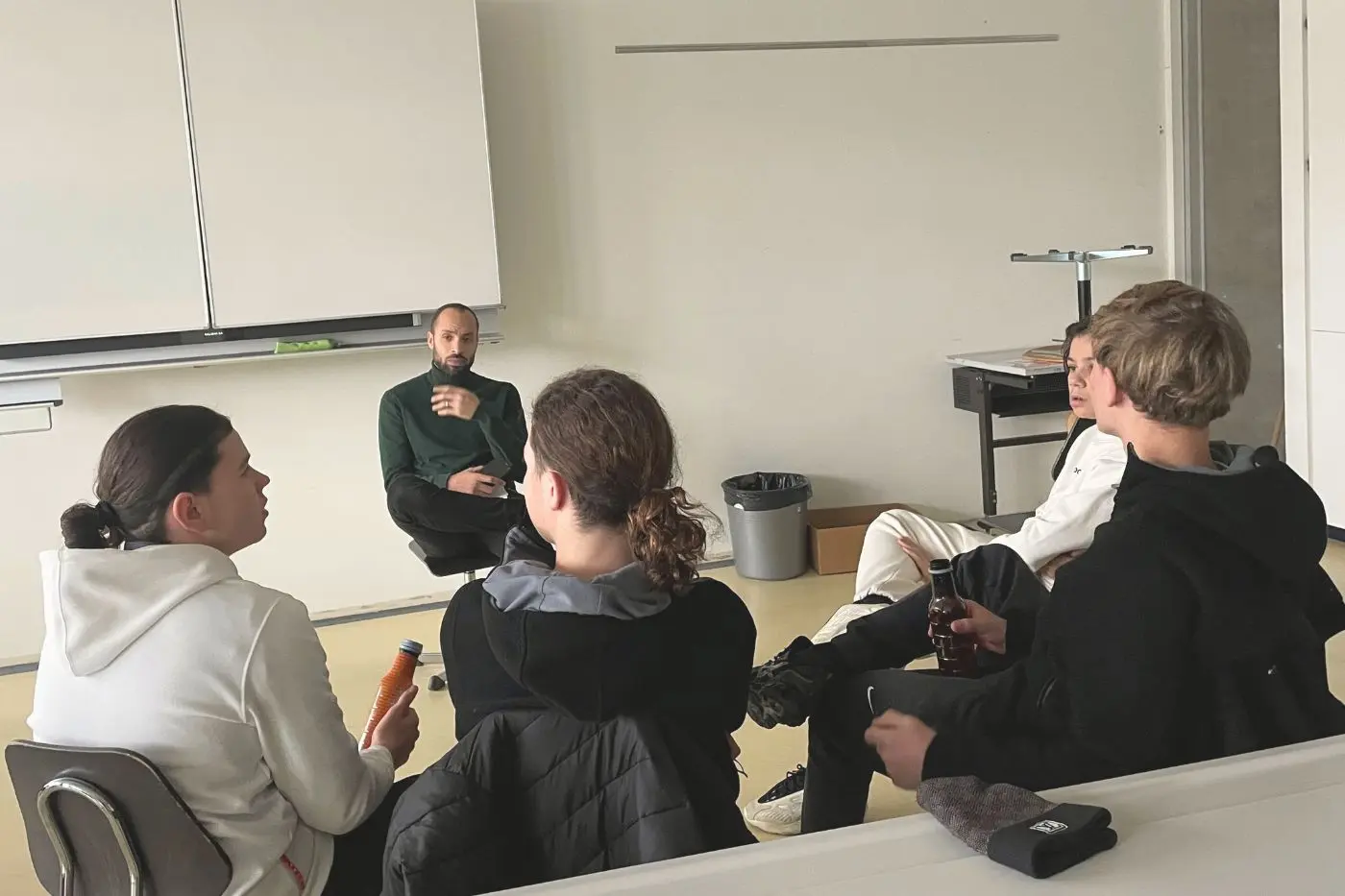
An experiential pedagogy that combines:
- Mindfulness practices (body awareness, breathing, visualization)
- Interactive activities (role-playing, simulations, creative arts)
- Time to talk and reflect on emotions, needs and relationships.
Each activity is designed to foster self-esteem, mutual understanding and empowerment within a safe and supportive environment.
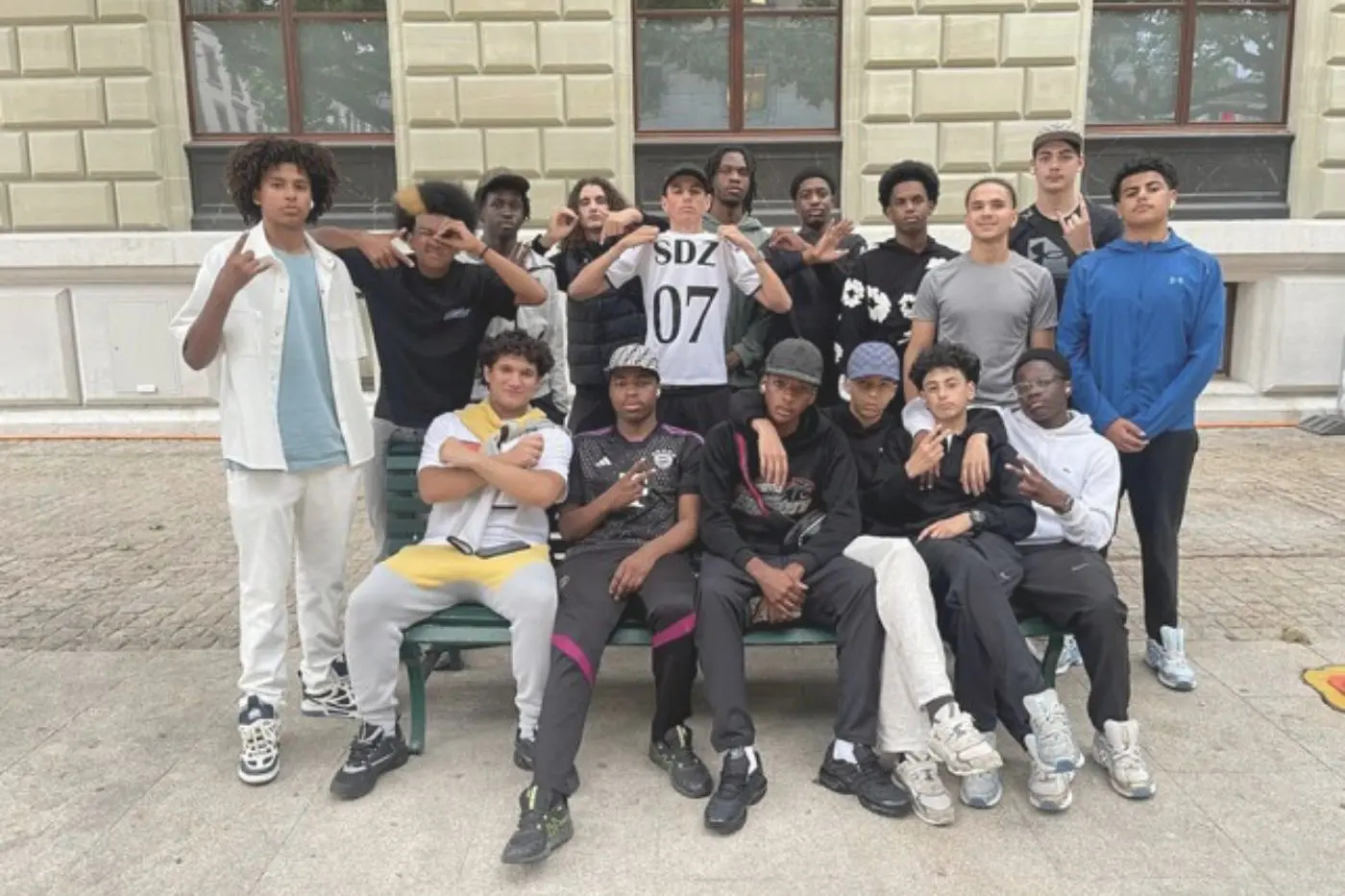
The main elements of the program:
- A structured pedagogical guide to help teenagers manage their emotions, build cooperation and prevent violence.
- An initial 2-day training course for youth leaders and professionals to develop empowering educational practises and acquire leadership tools.
- One-off workshops tailored to the needs of the group: conflict management, emotional regulation, cohesion, violence prevention, community building.
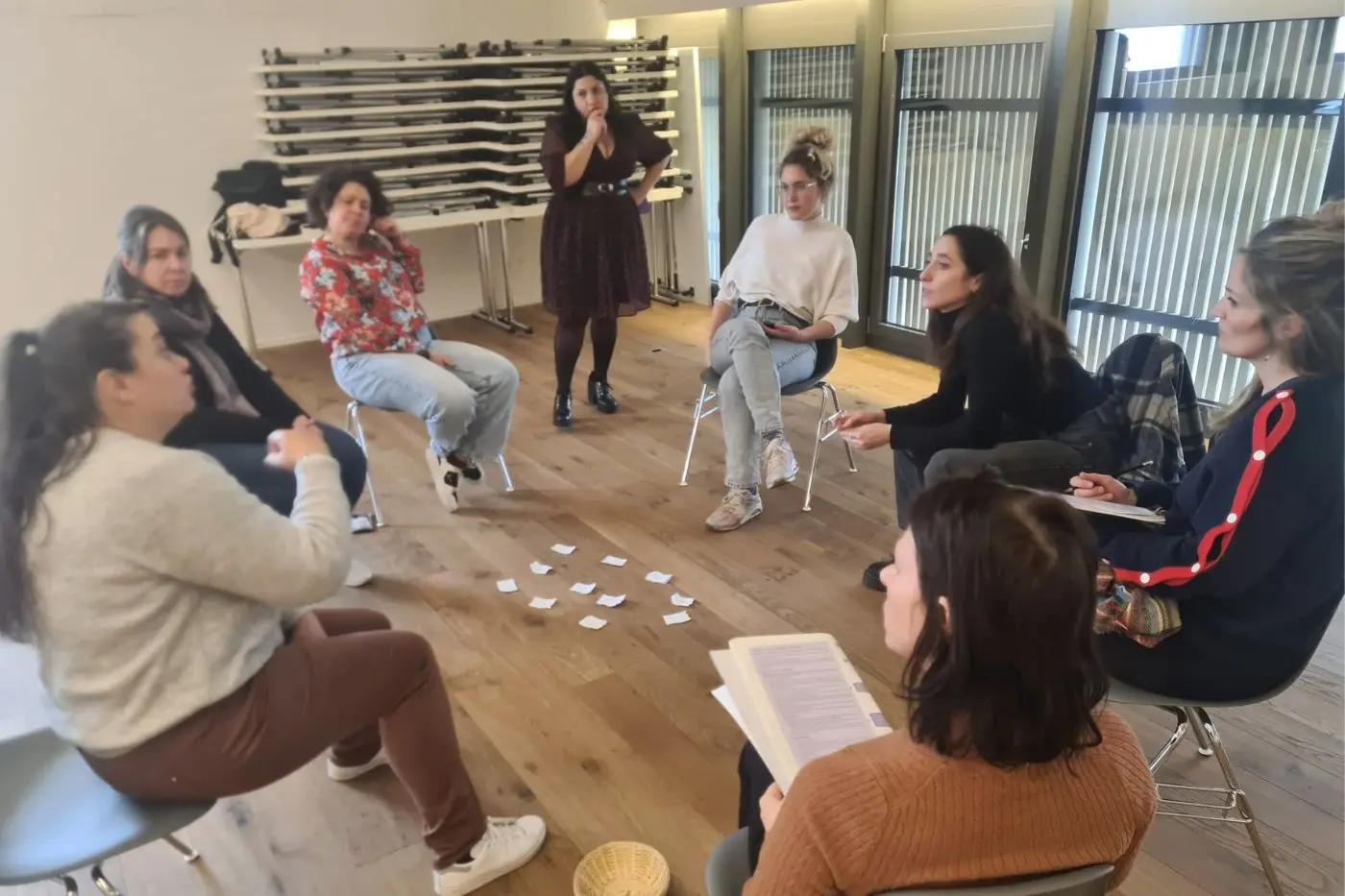
Designed by Graines de Paix in collaboration with professionals in the field (social work, mental health, education), AdoGoZen draws on:
- Research in affective neuroscience
- Insights from secular mindfulness and emotional education
- Feedback from field experimentation in youth facilities in French-speaking Switzerland
When young people feel listened to, respected and trusted, anything is possible.
Available resources
The AdoGoZen program provides a range of practical resources to support professionals in their work with adolescents:
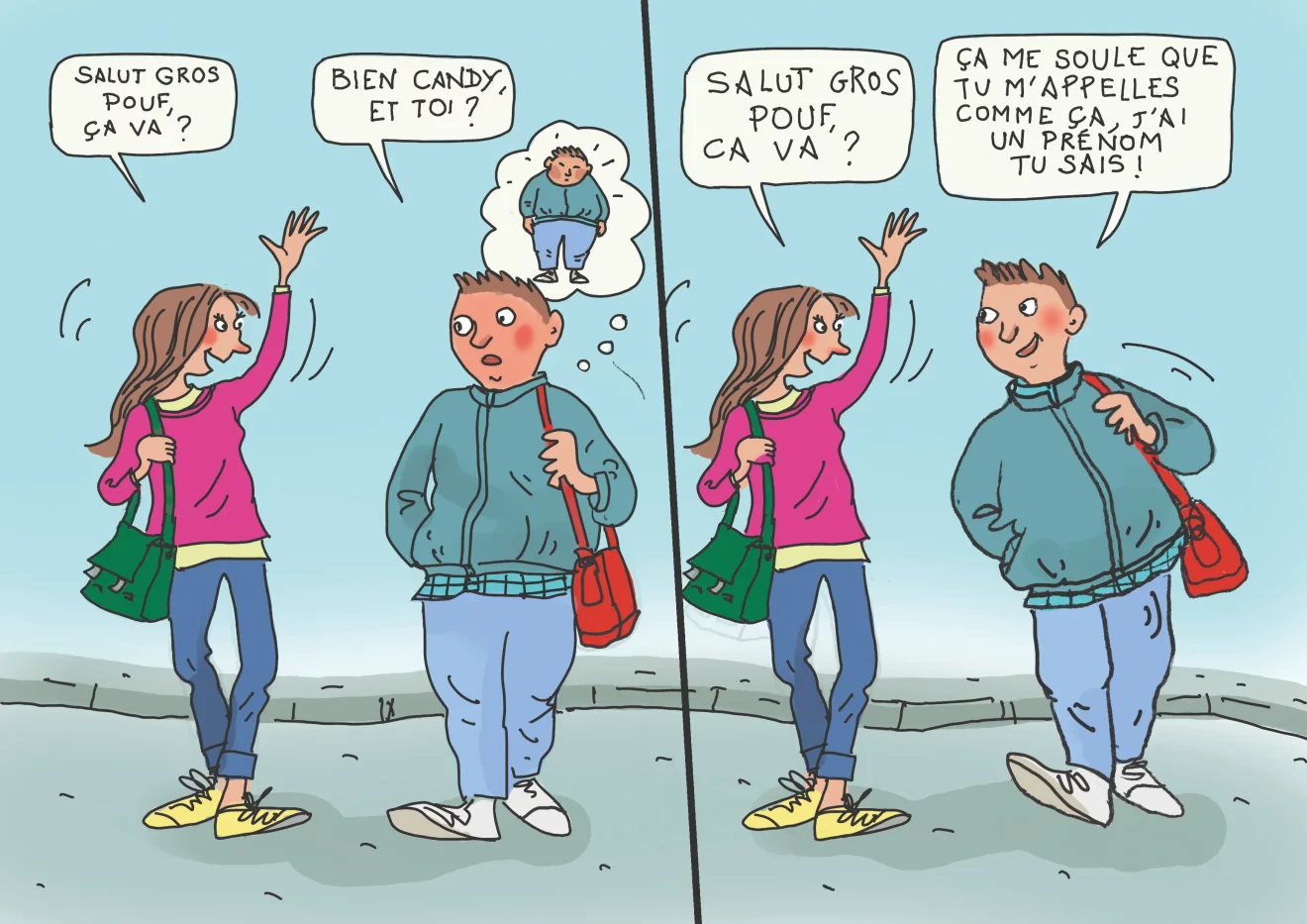
AdoGoZen guide
A comprehensive guide, designed by Graines de Paix, to integrate the program’s activities into the daily life of youth centers.
Impacts observed
- More confident young people
They are more in sharing their ideas, handle tensions better and identify calming strategies. - Improved emotional regulation
They develop self-regulation skills and express their feelings more calmly. - Strengthened violence prevention
Cooperation and mutual listening are strengthened, reducing conflict and violent behavior. - Better equipped professionals
Groups become more cohesive, creating an environment conducive to learning and inclusion.
What they say




Ideas for the classroom
Mini practice
#1
For me, violence is…
Each participant writes a sentence on a post-it note, beginning with “For me, violence is…”.
In small groups, participants randomly draw a post-it note and imagine a short role-play illustrating the situation. The scenes are then shared with the whole group, followed by a collective discussion.
Objective:
Explore perceptions of violence, identify different roles (victim, perpetrator, witness) and reflect on non-violent responses.
Mini practice
#2
The crumpled banknote
The facilitator shows a CHF 100 banknote, crumples it, steps on it, then offers it again: its value remains unchanged despite the marks left on it. Participants then share their thoughts and reactions.
Objective:
To help participants understand that, like this banknote, every person retains their value and dignity, regardless of appearance, personal history or the judgments placed upon them.


Subscribe to your newsletter
Follow our initiatives to prevent violence among young people.