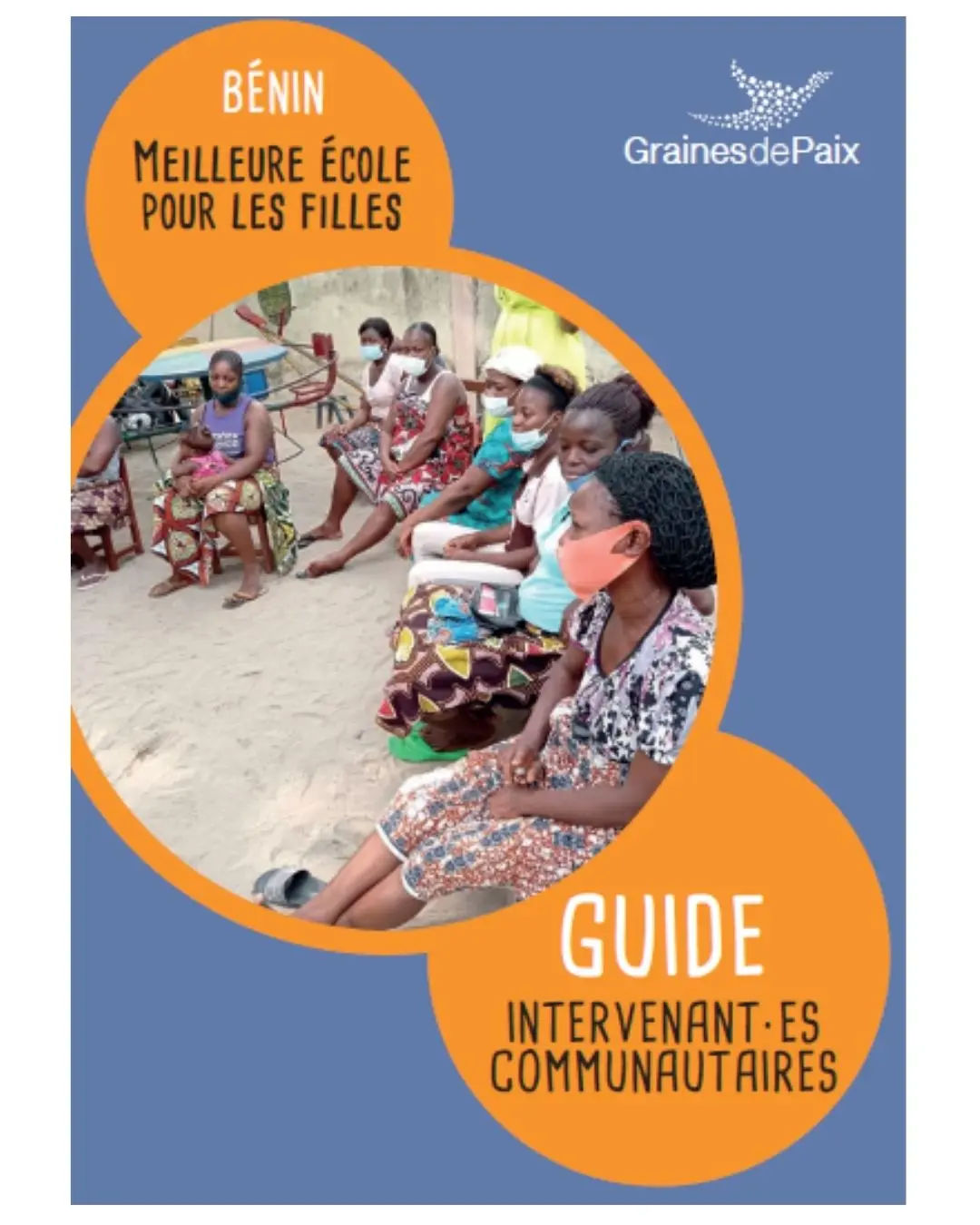
Training guide for community workers
A resource from the Better Schools for Girls program
A guide designed to support social workers and parent representatives. It reinforces their role in promoting inclusive, violence-free education.
What the teaching guide suggests
Support for community players
Teaching aids to raise awareness among families and communities of children’s rights and the importance of education, especially for girls.
A reflection on stereotypes
Activities and discussions to deconstruct preconceived ideas about social roles (jobs with a future, domestic chores…) and promote equal opportunities.
A visual tool for communicating with families
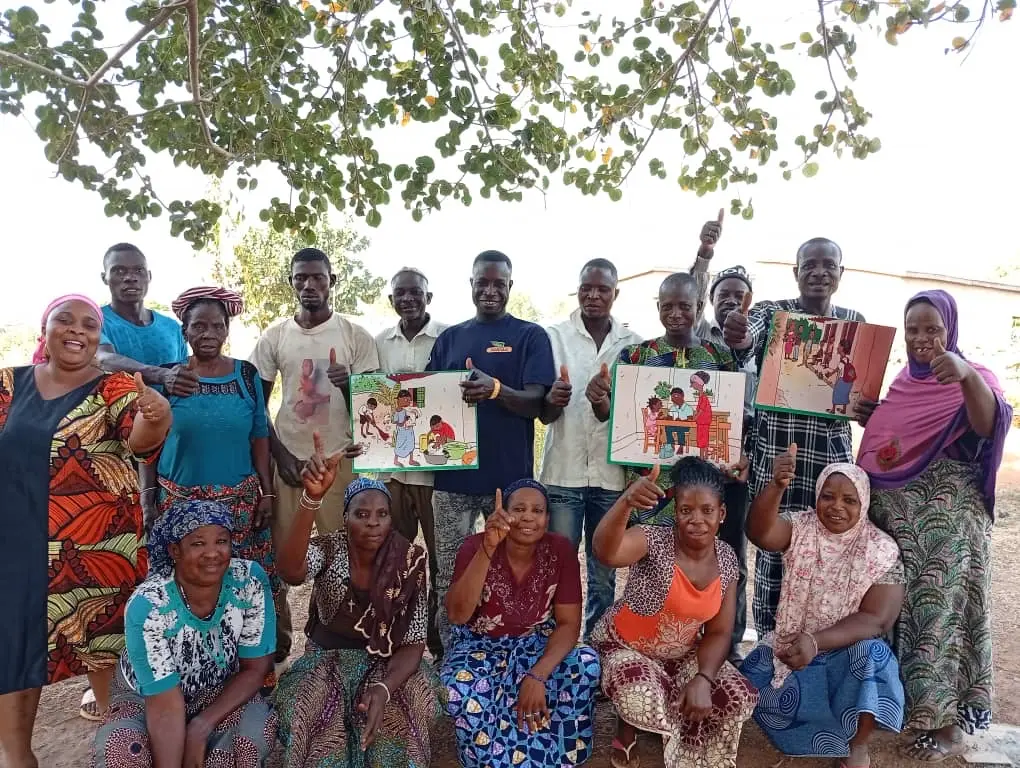
Illustrated boards in the form of a picture book to stimulate dialogue, even with parents who have little or no literacy skills. They help raise awareness of the different forms of violence affecting children.
Community-based, participatory teaching
This guide offers awareness-raising modules and practical tools to support communities. It helps to understand the impact of emotions, to deconstruct gender stereotypes and to promote positive, non-violent education.
Guide users: social workers, representatives of Parents’ Associations (APE) and the School Mothers’ Association (AME).
Final beneficiaries: parents, families and local communities
Format: printed guide accompanied by community picture book
Interested in finding out more?
Contact us
prestations@grainesdepaix.org
Pedagogical objectives
- Build the capacity of social workers and community leaders.
- Sensitize families and communities to the importance of girls’ education.
- Deconstruct gender stereotypes that hinder schooling and success.
- Prevent and reduce violence against children, especially girls.
- Valuing the role of parents as school partners.
Changing mentalities in families means opening up the future for girls.
The community imagier
At the heart of the activities is the community imaginary book, which illustrates everyday situations and suggests non-violent alternatives.
Used during sessions, it facilitates dialogue with families and encourages lasting changes in educational and social practices.