Program for communities and families
Part of the Learning in Peace, Educating without Violence program (APEV)
A scheme that mobilizes families, local leaders and social workers to strengthen co-education and support community dynamics in northern Benin.
The community component of the Learning in Peace, Educating without Violence program brings together families, local leaders and young people around collective actions aimed at creating a protective environment and consolidating collaboration between schools, parents and communities.
Trained and equipped, social workers become key relays: they lead community workshops, reinforce parenting skills and support the deployment of program activities in the localities of northern Benin.
Train
Strengthening the skills of community players
The program trains social workers to support families and communities. Thanks to a dedicated community guide, they acquire the pedagogical foundations needed to support parents, foster dialogue and encourage protective, non-violent educational practices.
Tooling
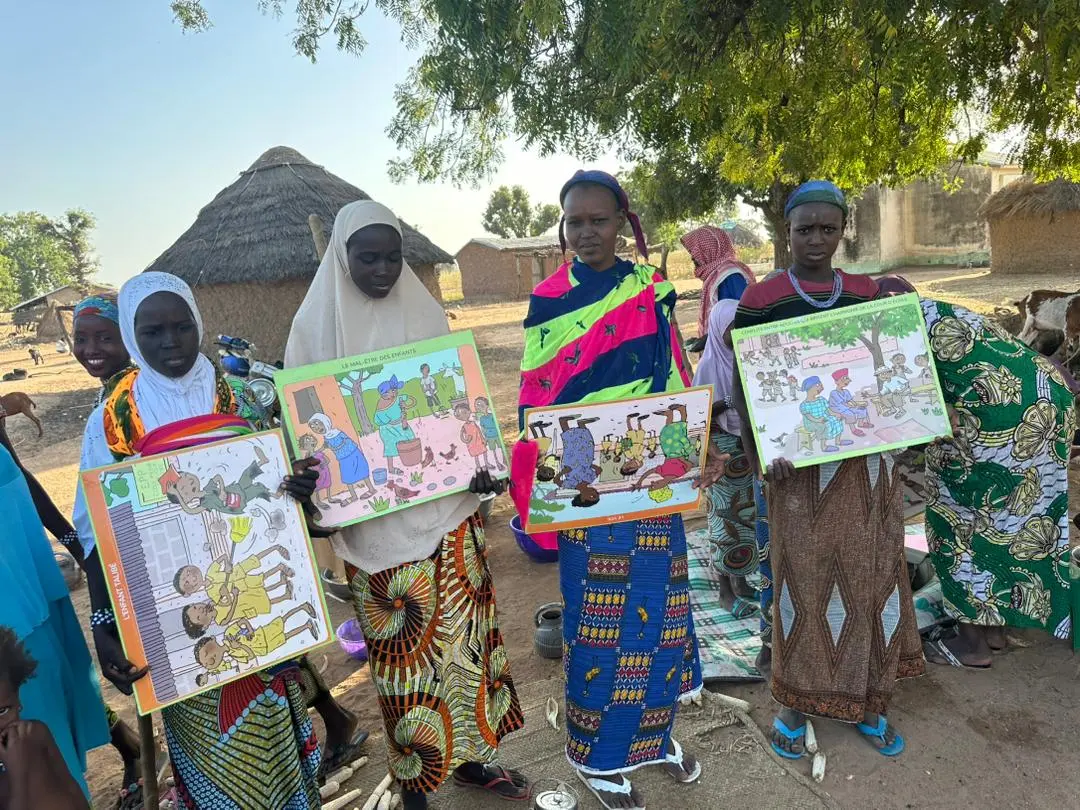
Providing concrete tools for working with families
Simple, visual and accessible resources enable practitioners to act effectively in the field:
- A picture book for all families, even non-literate ones.
- Mapping to identify and mobilize local players.
- Videos to stimulate reflection on inclusion, gender and non-violence.
These tools make action more concrete and facilitate the participation of parents and local leaders.
Putting it into practice
Deploying actions within communities
Present in four departments in northern Benin, the program is implemented through :
- community events,
- activities linking schools, families and young people,
- media awareness campaigns (radio, films, public screenings).
- the involvement of trained social workers.
Six “Sowers of Peace” centers serve as local hubs where families, young people and leaders come together to strengthen social cohesion and educational resilience.
These actions are part of a collective dynamic driven by families, schools and local authorities. Together, they contribute to creating safe, inclusive and resilient educational environments, where every child can learn, flourish and grow in peace.
Community program objectives
These actions pursue six complementary objectives, organized around the program’s three areas of intervention.
- Training players and strengthening educational links
- Protect children from all forms of violence by involving families, local leaders and communities.
- Strengthening co-education by bringing families, schools and communities closer together
- Train and equip social workers and their pairs to animate communities.
- Supporting families with tools and continuity
- Guarantee educational continuity in the event of a crisis or school closure.
- Involve young people as agents of change through creative and digital initiatives.
- Put into practice and disseminate widely
- Spread messages of non-violence, inclusion, gender equity and the environment through the media and community activities.
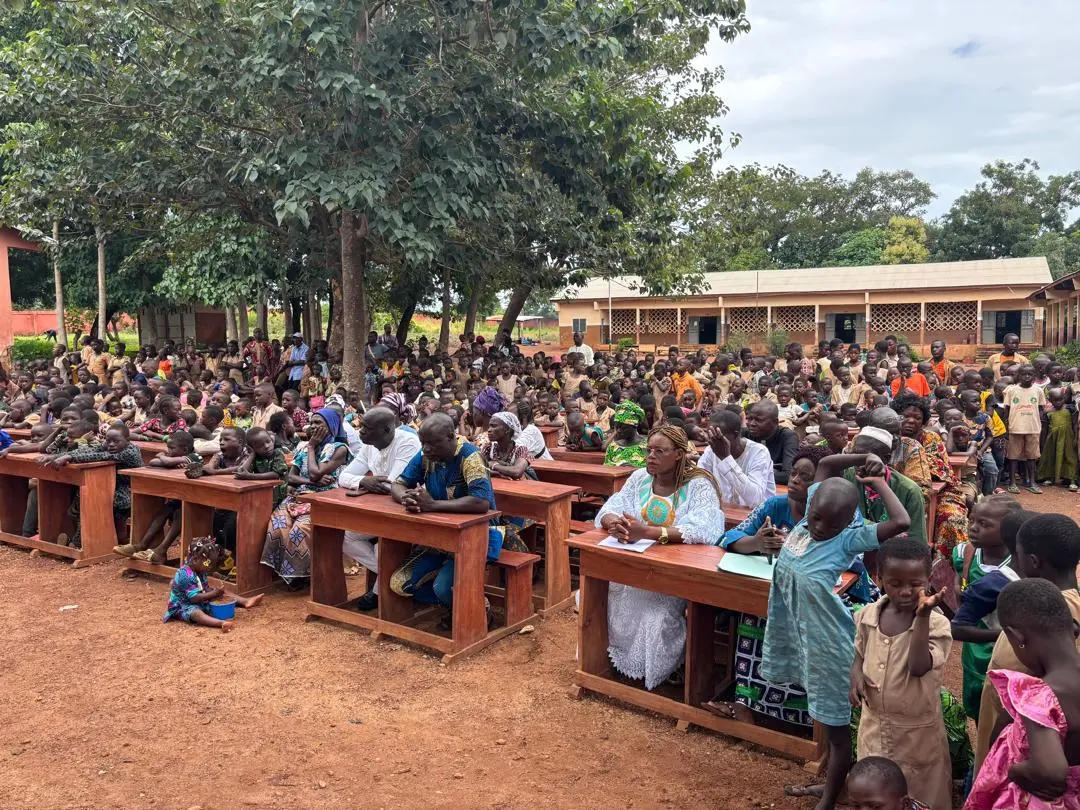
“Children have the right to be protected from all forms of violence, abuse or neglect.”
Article 19 of the UN Convention on the Rights of the Child