Living Together in Harmony
Because learning to live well together starts in the first years of school.
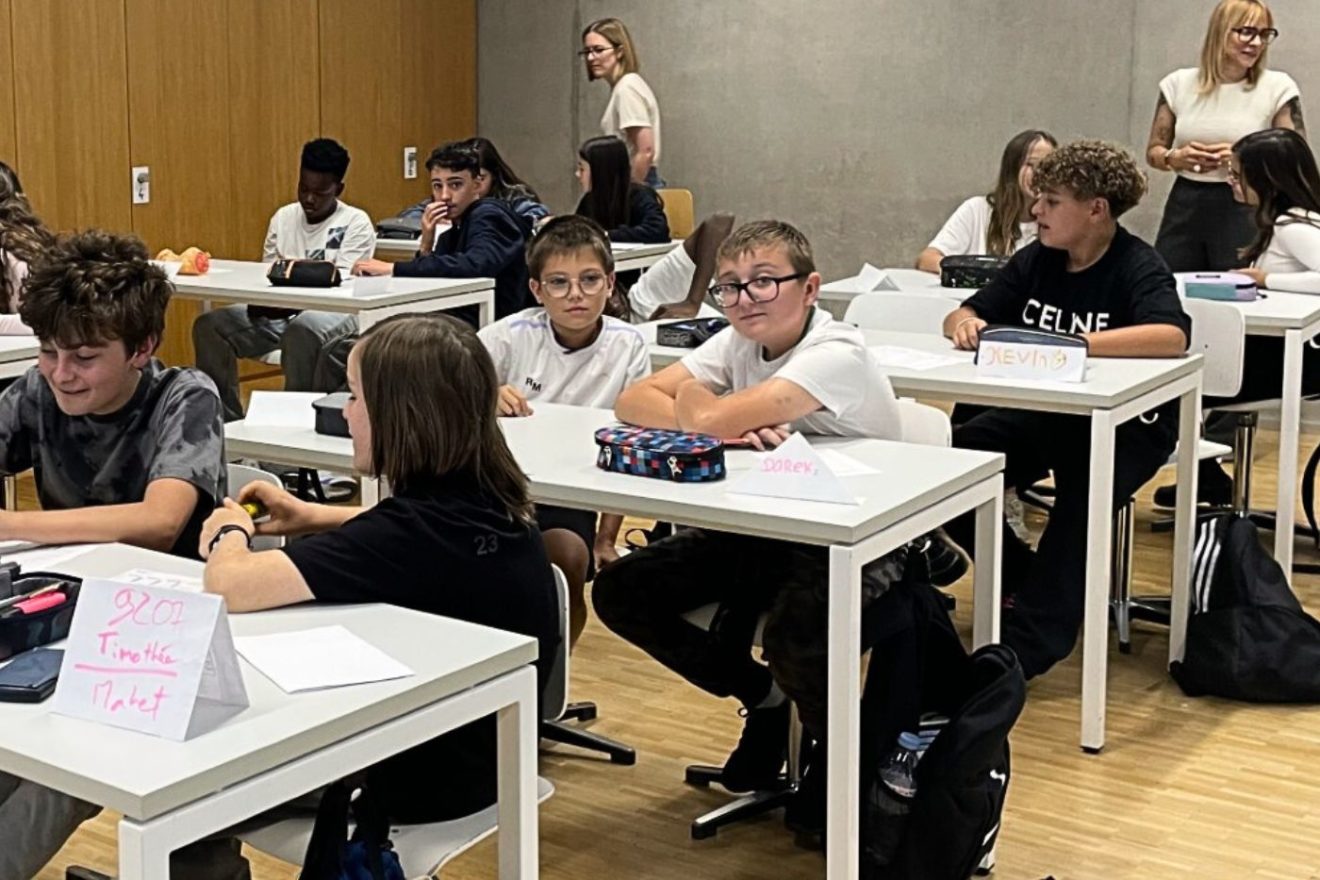
Living Together in Harmony supports lower secondary schools (ages 12–15) in building a calm, respectful and stimulating school climate.
The program acts on three essential levers: perceived safety, the quality of relationships and the quality of learning.
Through a holistic approach and concrete tools, the program equips educational teams to reduce tensions, strengthen cooperation, prevent violence and develop students’ social and emotional skills. Interventions are flexible, modular and closely adapted to the realities of each school.
About the program
Foster an inclusive, demanding and rewarding learning environment by:
- Integrating socio-emotional skills into school learning
- Encouraging cooperation, autonomy and critical thinking
- Responding to student diversity through differentiated practices
- Developing students’ ability to meet today’s social and academic challenges
- Sustainably improving the school climate by reducing conflict and incivility
A holistic pedagogy rooted in UDL (Universal Design for Learning)
The program is built around three key drivers of school climate:
- Safety and justice: clear rules, respect for rights, consistent and proportionate consequences
- Quality of learning: development of socio-emotional skills, ongoing professional development for teaching teams
- Relationships and belonging: valuing diversity, educational cohesion, a strong sense of inclusion
A range of services that can be tailored to your needs:
- Option 1 – Targeted interventions: hands-on use of the guide, short training courses and immediate, field-based responses
- Option 2 – Raising awareness: conferences and workshops for the educational community (teachers, parents, staff)
- Option 3 – Full program (2 years): participatory diagnosis, co-construction of a shared educational vision, ongoing training, classroom interventions and evaluation of observed transformations.

A program developed in close collaboration with the educational field and validated through practice.
- Based on research in education and affective sciences
- Based on a survey conducted in 2018 in Swiss and French schools
- Piloted in 2019-2020 in several secondary schools
- Aligned with the Plan d’Études Romand (PER) and the Sustainable Development Goals (SDGs)
- Building on the the expertise of the Growing Up in Peace program (over 6,000 guides distributed)
A program for safer, fairer secondary schools where every student feels respected, listened to and empowered to act.
Living Together in Harmony: program resource and complementary tools
The Living Together in Harmony program is based on a pedagogical guide for lower secondary education, aimed at improving school climate and strengthening inclusion.
Alongside the program, the PAX comic is a stand-alone resource offering an engaging, playful entry point to non-violence, cooperation and conflict management.
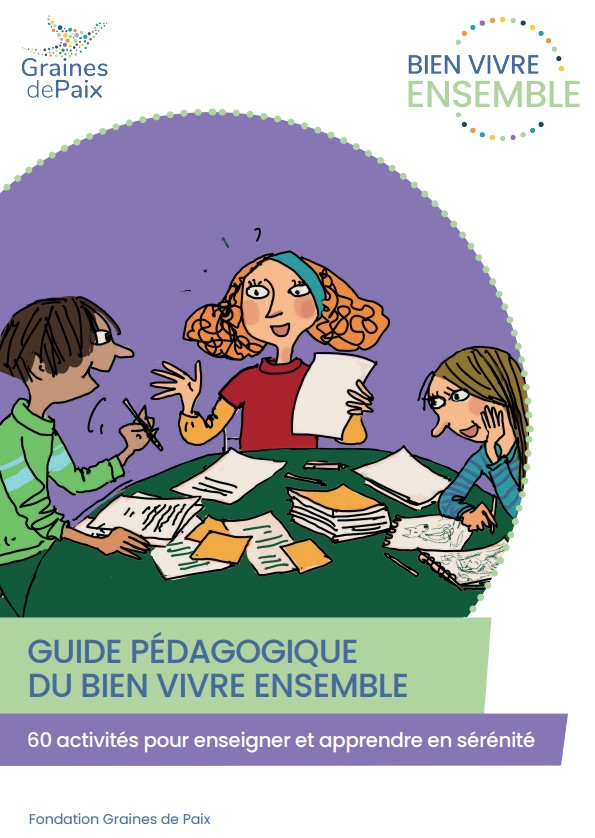
Living together in harmony guide
A pedagogical guide designed to improve school climate. It offers seven sequences of concrete activities to strengthen inclusion, safety and cooperation.
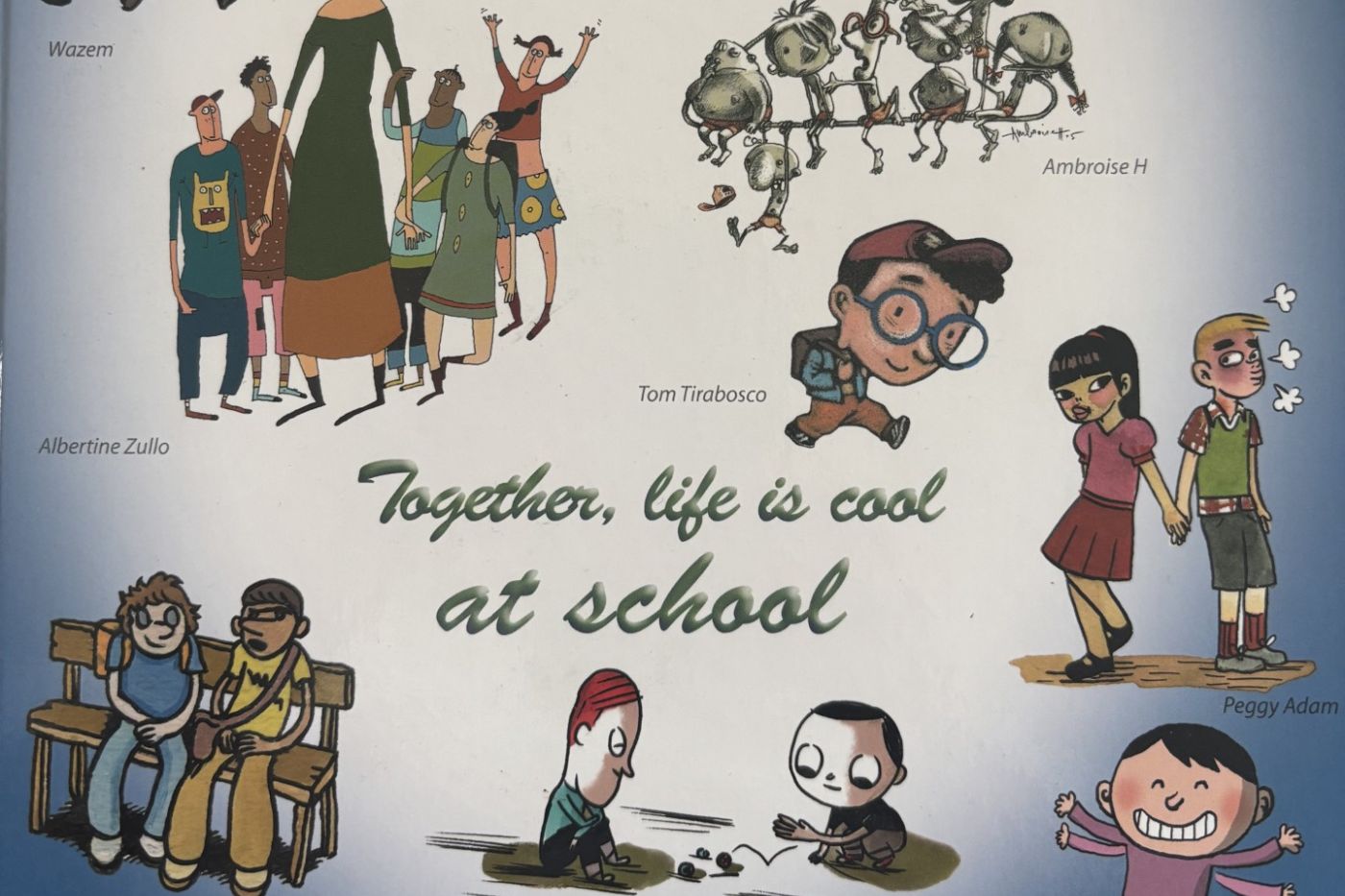
Educational comic PAX!
An engaging comic strip designed to prevent violence and encourage collective reflection. It can be used in the classroom or for individual reading.
Impacts observed
- A calmer climate
Tensions are reduced, perceived safety increases, and the classroom atmosphere becomes calmer. - Healthier relationships
Respect, listening and cooperation between among students increase. Group discussions become more natural. - Teachers better equipped
They gain confidence in preventing conflict, and have practical tools they can use directly in the classroom. - More committed students
Young people develop their ability to influence the relational climate and take an active role in school life.
What they think


Ideas for the classroom
Mini practice
#1
Entry ticket
Students are asked three questions at the beginning of the session to assess what they have learned in the previous lesson and engage them in the activity:
- What I already know about the subject
- A question I would like to explore
- My objectives for this lesson
Objective:
Capture the group’s attention, support follow-up, reinforce learning and ensure continuity between lessons.
Mini practice
#2
Anger under control:
learn to manage it
In pairs, participants identify what triggers their anger and explore for non-violent ways of expressing it:
- What situations trigger my anger?
- What non-violent strategies can I adopt?
Objective:
Understand personal anger triggers and learn to regulate anger constructively, without harming relationships.


Subscribe to our newsletter
Follow our initiatives and actions to strengthen positive living together at school.